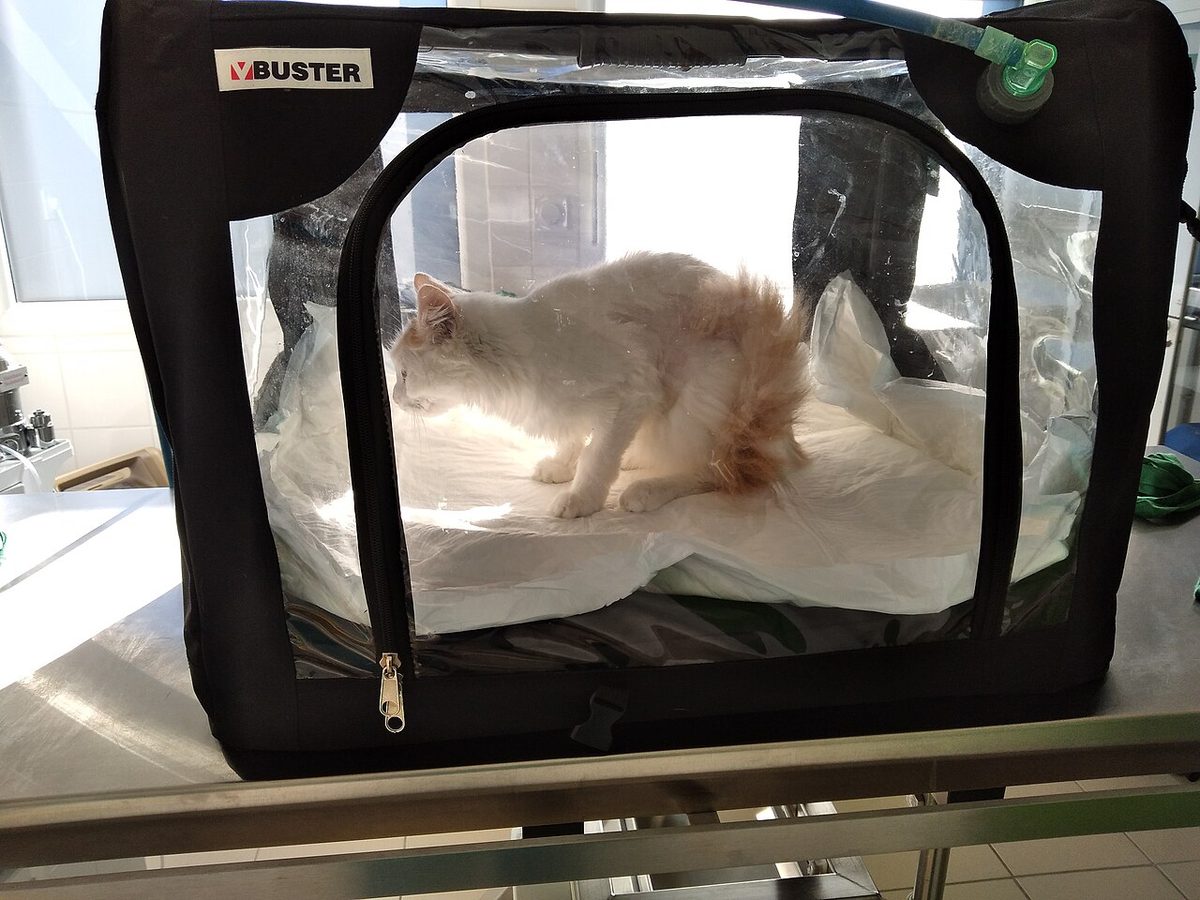
A veterinary ICU is a hospital area where critically ill patients are continuously observed by trained staff who are physically present, with oxygen, infusion pumps, monitoring and — at the largest centres — ventilators and dialysis. Cost typically runs $1,500 to $6,000 for a stay, billed per day and escalating with the level of support. The distinction that matters most to owners is not the equipment. It is whether someone is in the building at 3am.
"Open 24 hours" and "24-hour care" are not the same claim
This is the single most useful thing an owner can learn, and almost nobody is told it.
A clinic can be open all night, with a veterinarian seeing walk-in emergencies while hospitalised patients are checked between cases. A true ICU means a patient is continuously watched, with someone who will notice deteriorating breathing within minutes rather than at the next round. And some practices hospitalise patients overnight with nobody on site at all — the animal is alone in a kennel until morning.
All three are legitimate business models. They are not the same product, and the price does not always tell you which you are buying. Ask plainly:
"Overnight, is someone physically in the building with my pet — and is that a veterinarian or a technician?"
It costs nothing to ask, and it is the question that separates the options.
What a veterinary ICU contains
- Continuous monitoring — ECG, blood pressure, pulse oximetry, capnography and temperature. See [anesthesia monitoring](/procedures/anesthesia-monitoring/) for what these actually measure.
- Oxygen support — oxygen cages, and high-flow nasal oxygen for patients who need more. See [oxygen therapy](/procedures/oxygen-therapy/).
- Mechanical ventilation for patients who cannot breathe adequately on their own — the highest level of respiratory support, requiring continuous sedation and one-to-one nursing.
- Infusion and syringe pumps delivering fluids and drugs at precisely controlled rates.
- On-site rapid diagnostics — an [in-house laboratory](/procedures/in-house-laboratory/) that can run bloodwork overnight, plus [ultrasound](/procedures/ultrasound/).
- [Blood transfusion](/procedures/blood-transfusion/) capability, and [dialysis](/procedures/hemodialysis/) at a small number of referral centres.
- Incubators with controlled temperature and humidity for neonates and small exotic patients.
Who staffs it
The specialist qualification is board certification in emergency and critical care (DACVECC), held by veterinarians who have completed a residency in the discipline. Criticalists are concentrated in referral and university hospitals rather than general practices. Alongside them, credentialed veterinary technicians — often with their own emergency and critical care specialty certification — provide the hour-by-hour nursing that actually determines outcomes.
What it costs, and how to stay in control of it
Intensive care is billed per day, and the daily figure climbs steeply with ventilation, transfusion or dialysis. A straightforward overnight stay for fluids and observation sits at the bottom of the range; a ventilated patient over several days can exceed the top of it.
Two things are entirely reasonable to ask for, and good hospitals expect both: a written estimate with a range rather than a single number, and a daily update covering both the clinical trajectory and the running total. Being told the cost early is not a sign anyone has given up on your pet.
The conversation worth having at the start
Intensive care buys time for a problem that can be fixed. Where the underlying disease has no treatable path, continued support prolongs the process rather than changing the outcome. That conversation belongs at the beginning — asking "what are we hoping this changes, and by when will we know?" is not pessimism. It gives you and the clinical team a shared checkpoint instead of a drift of days.
Transfer carries risk too. A patient who is critically unstable may need to be stabilised where they are before moving to a referral ICU; your vet and the receiving hospital decide that together.
Species differences
Dogs and cats make up most ICU patients, and cats are notably good at hiding respiratory distress until they are close to failure — open-mouth breathing in a cat is always urgent.
Exotic patients need species-specific capability, not just a spare cage. Birds and reptiles need incubators with controlled temperature and humidity. A [rabbit](/emergency/is-my-rabbit-not-eating-an-emergency/) or guinea pig that stops eating in hospital is deteriorating rather than sulking, and needs assisted feeding started early. If your pet is not a dog or cat, ask specifically whether the hospital has staff experienced with the species overnight.
Visiting
Policies vary widely and matter enormously to families. Some ICUs welcome visits, some restrict them to set hours, and some discourage them for patients whose stress worsens their condition. Ask — and if visiting is not possible, ask how and when you will get updates instead.
Who isn't a candidate
- Other: Not a contraindication but the decision that matters most — intensive care buys time for a problem that can be fixed. Where the underlying disease has no treatable path, continued ICU support prolongs the process rather than changing the outcome, and a candid prognosis conversation belongs at the start, not on day four.
- Other: Transfer itself carries risk. A patient that is critically unstable may need to be stabilised where it is before moving to a referral ICU; the receiving hospital and your vet decide that together.
- Other: Intensive care is billed per day and escalates quickly with ventilation, transfusion and dialysis. Ask for a written estimate and a daily update on both the clinical trajectory and the running total — good ICUs expect that question.
Common questions
What is a veterinary ICU?
A hospital area where critically ill animals are continuously monitored by trained staff who are physically present, with oxygen, infusion pumps, ECG and blood-pressure monitoring, and often ventilators, transfusion and dialysis capability.
How much does it cost to hospitalise a dog in intensive care?
Typically $1,500 to $6,000, billed per day. A simple overnight stay on fluids sits at the low end; ventilation, transfusion or dialysis over several days can exceed the top. Ask for a written estimate and daily running totals.
What is the difference between an emergency vet and an ICU?
An emergency service sees urgent cases as they arrive. An ICU provides continuous inpatient monitoring and support for patients who are already critically ill. Many hospitals have both, but "open 24 hours" does not by itself mean continuous overnight supervision.
How do I know if my pet will be supervised overnight?
Ask whether someone is physically in the building overnight, and whether that person is a veterinarian or a technician. Some practices have full ICU staffing, some have a vet on site seeing emergencies, and some leave hospitalised patients unattended until morning.
What does it mean if my pet needs a ventilator?
It means they cannot breathe adequately on their own and a machine is doing that work while the underlying problem is treated. It requires continuous sedation and one-to-one nursing, is available only at larger referral centres, and is the most intensive and expensive level of support.
Sources
Looking for a specific clinic? Browse our directory of specialist veterinary practices.