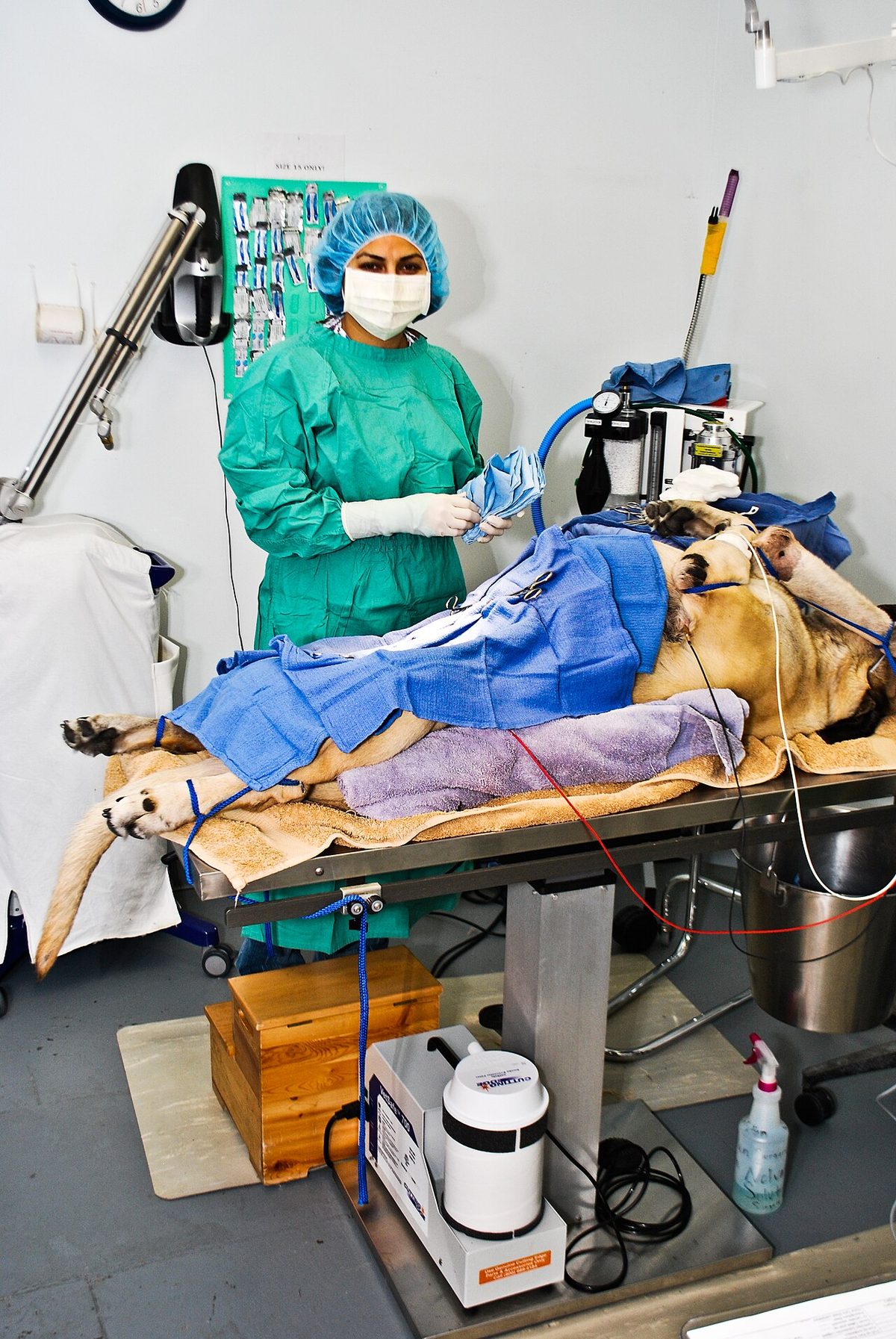
Anaesthesia monitoring is the equipment and the person tracking your pet's oxygen, breathing, circulation and temperature from induction through recovery. It typically appears on an invoice at $150 to $700 as part of a surgical or dental fee. Owners often read that line as padding. It is closer to the opposite: in a healthy dog or cat, what makes anaesthesia low-risk is not the drug — it is the monitoring, and whose job it is to watch it.
What should be monitored
Ask which of these your pet will have. The list is short and entirely reasonable to ask about:
- Pulse oximetry — oxygen saturation in the blood, the most familiar of the monitors.
- Capnography — end-tidal carbon dioxide. This is the one worth knowing about. It is usually the earliest warning that breathing or circulation is failing, and it confirms the breathing tube is where it is supposed to be. A practice that has capnography and uses it is monitoring at a meaningfully higher level.
- Blood pressure — low blood pressure under anaesthesia is common, is often silent, and damages kidneys over time. See [blood pressure monitoring](/procedures/blood-pressure-monitoring/).
- ECG — heart rhythm. See [electrocardiography](/procedures/electrocardiography/).
- Temperature — anaesthetised animals lose heat fast, small ones fastest, and hypothermia slows recovery and drug clearance.
The part that isn't equipment
Monitors do not watch themselves. The question that most separates practices is whether a trained person is assigned solely to anaesthesia during the procedure — someone whose only job is your pet, rather than the surgeon, whose attention is necessarily on the surgery.
The second question is about timing. Most anaesthetic deaths occur in recovery, not during the procedure, in the window after the patient leaves the table and before they are fully awake. Monitoring that stops when the surgery stops leaves the highest-risk period uncovered. Asking "is my pet monitored during recovery too, and by whom?" is a fair and specific question.
What happens before the anaesthetic
Good anaesthesia starts before any drug is given:
- Pre-anaesthetic bloodwork checks the liver and kidneys, which clear the anaesthetic drugs. Early disease in either is silent from the outside — see [in-house laboratory](/procedures/in-house-laboratory/) for why same-day results matter here.
- A physical exam and history, including any previous anaesthetic reaction.
- An IV catheter and fluids, which maintain blood pressure and provide instant access if a drug is needed urgently.
- Active warming — a warming blanket or forced-air device, not just a towel.
Procedures where this applies
Almost anything requiring stillness or pain control: [dental cleaning](/procedures/dental-cleaning/) and [tooth extraction](/procedures/tooth-extraction/), [spay](/procedures/spay-ovariohysterectomy/) and [neuter](/procedures/neuter-castration/), [tumour removal](/procedures/tumor-removal/), orthopaedic surgery, [endoscopy](/procedures/endoscopy/), and imaging such as [CT](/procedures/ct-scan/) and [MRI](/procedures/mri-for-pets/), where an animal cannot be asked to hold still.
Which pets are higher risk
- Brachycephalic (flat-faced) breeds — bulldogs, French bulldogs, pugs, Boston terriers, Persian cats. Their airways are the problem, and recovery is the risky part: the breathing tube comes out and the airway can obstruct. These patients need a longer, closely watched recovery.
- Geriatric patients and those with heart or kidney disease, where blood pressure support and drug selection matter more.
- Very small patients, who lose heat quickly and have little margin for dosing error.
Species differences
Cats are sensitive to a number of drugs dogs tolerate well, and dose precision matters more at their body size.
Exotic pets carry genuinely higher anaesthetic risk, and here species experience matters more than any single monitor. Rabbits are a particular concern: they are frequently anaesthetised for dental work, they cannot vomit so do not require fasting the way dogs do — and prolonged fasting actively harms them — and they need to start eating again quickly afterwards. A [rabbit that is not eating](/emergency/is-my-rabbit-not-eating-an-emergency/) after a procedure needs attention, not patience. Birds and reptiles need temperature support throughout, because they cannot regulate their own under anaesthesia.
If your pet is not a dog or cat, ask how many of that species the practice anaesthetises in a typical month.
How to tell whether a clinic monitors well
Three questions, none of them confrontational:
1. "Which monitors will my pet be on — do you use capnography?" 2. "Is someone assigned only to anaesthesia during the procedure?" 3. "Is my pet monitored during recovery, and for how long?"
A practice doing this well will answer readily and in detail. The answers are also a reasonable way to compare two quotes that differ in price — a cheaper procedure with less monitoring is not the same procedure.
Who isn't a candidate
- Other: Not a contraindication — monitoring has no downside. The relevant risk is the opposite one: a procedure done under anaesthesia without monitoring, or with monitoring nobody is watching. Equipment on a shelf is not monitoring; a dedicated person watching it is.
- Concurrent condition: Brachycephalic breeds, patients with heart disease, and geriatric or very small patients carry higher anaesthetic risk and are exactly the cases where the depth of monitoring and the recovery period matter most.
- Other: Most anaesthetic deaths happen in recovery, not during the procedure. Monitoring that stops when the surgery stops leaves the highest-risk window uncovered.
Common questions
What monitoring should my pet have under anesthesia?
At minimum pulse oximetry, blood pressure, ECG and temperature, with capnography (end-tidal CO2) as the marker of a higher standard. Equally important is a trained person assigned solely to monitoring your pet, and monitoring that continues through recovery.
What is capnography and why does it matter?
Capnography measures the carbon dioxide your pet breathes out. It is usually the earliest indicator that breathing or circulation is deteriorating — often before oxygen saturation drops — and it confirms the breathing tube is correctly placed. It is a meaningful marker of monitoring depth.
Why does my vet charge separately for anesthesia monitoring?
Because it is staff time and equipment, not a formality — a dedicated person watching several monitors from induction through recovery. It is one of the main reasons anaesthesia is safe in healthy animals, and comparing two quotes without comparing monitoring is not comparing like with like.
Is anesthesia more dangerous for flat-faced breeds or older pets?
Yes. Brachycephalic breeds have airways that can obstruct during recovery, which is why they need extended, closely watched recovery. Geriatric patients and those with heart or kidney disease need tailored drug protocols and blood-pressure support. Both are manageable with appropriate monitoring.
What should I ask my vet before my pet's surgery?
Ask which monitors will be used and whether capnography is among them, whether a person is dedicated solely to anaesthesia, whether monitoring continues into recovery, and whether pre-anaesthetic bloodwork is run before induction.
Sources
Looking for a specific clinic? Browse our directory of specialist veterinary practices.