Bottom Line
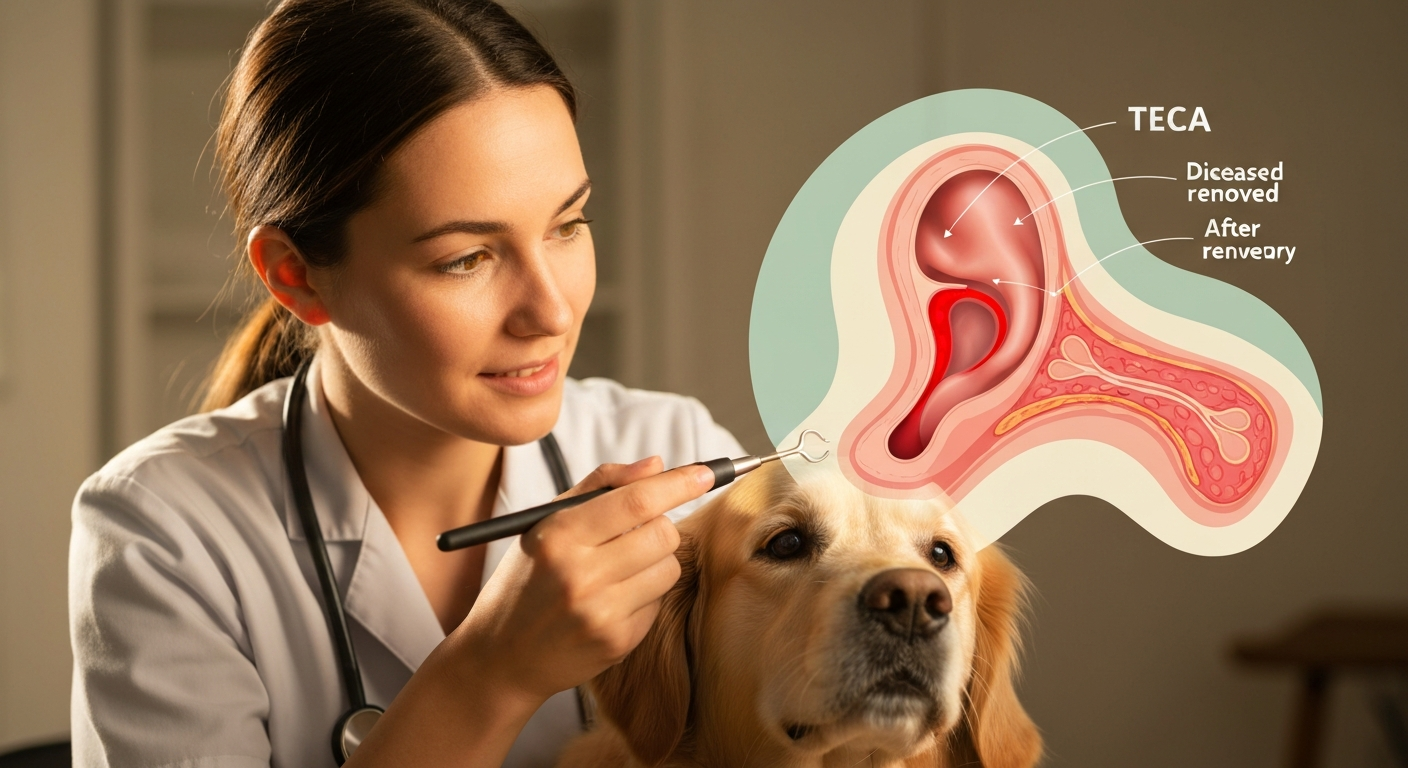
Total Ear Canal Ablation (TECA) surgery is a specialized procedure for dogs and cats suffering from severe, chronic, and often painful ear disease that hasn't responded to other treatments. It involves removing the entire diseased ear canal and often a portion of the middle ear, providing significant relief and improving quality of life for pets with end-stage ear conditions.
What the procedure involves
TECA surgery is a complex procedure performed by a board-certified veterinary surgeon to address irreversible ear disease. It stands for Total Ear Canal Ablation, and it's frequently combined with a Lateral Bulla Osteotomy (LBO) – hence you might hear it called TECA-LBO. At its core, the surgery involves carefully removing the entire external ear canal, from the opening of the ear down to the eardrum. Imagine the ear canal as a long tube; in TECA, this entire tube, which is diseased and often thickened, calcified, or scarred beyond repair, is removed. The goal is to eliminate the source of chronic infection, inflammation, and pain.
During the procedure, your pet will be under general anesthesia. The surgeon makes an incision around the ear flap (pinna) and then meticulously dissects the ear canal away from surrounding tissues, including nerves and blood vessels. Once the canal is removed, the surgeon often proceeds with a lateral bulla osteotomy. The bulla is a bony cavity in the skull, just behind the eardrum, which contains the middle ear. In chronic ear disease, infection frequently extends into this area. An LBO involves surgically opening this bony bulla, cleaning out any infected material, polyps, or debris, and ensuring the middle ear is healthy before closing the surgical site. This combined approach ensures that both the external and middle ear components of the disease are addressed. The skin is then carefully closed, and the ear flap itself is often trimmed or re-shaped for better cosmetic appearance and comfort. While the ear flap (pinna) remains, the ear canal is permanently closed, meaning no more ear infections or associated pain from that side.
When this surgery is recommended
TECA surgery is typically recommended as a last resort when all other medical and less invasive surgical treatments have failed to manage severe, chronic ear disease. This procedure is reserved for pets experiencing persistent pain, recurring infections that don't respond to antibiotics, or structural changes to the ear canal that are beyond repair.
What conditions lead to TECA?
Conditions like severe, chronic otitis externa (inflammation of the external ear canal) that has led to irreversible changes such as calcification, stenosis (narrowing), or proliferative tissue growth often necessitate a TECA. Many pets suffering from long-standing allergies, for instance, can develop these severe changes over time. Tumors within the ear canal, or widespread middle ear infections (otitis media) that can't be resolved medically, also make a pet a candidate for TECA. The decision to pursue TECA is rarely made lightly; it's usually the culmination of years of medical management, various treatments, and often, significant discomfort for the pet.
"A vet will make a diagnosis by asking questions about the dog's history, performing both physical and skin exams, and taking selected tests. If your dog has had ear infections or other problems in the past, tell the veterinarian." – Nick Roman, DVM, MPH, The MSD Veterinary Manual Source: https://www.merckvetmanual.com/dog-owners/ear-disorders-of-dogs/disorders-of-the-outer-ear-in-dogs
Before recommending TECA, your veterinarian will likely have tried various approaches, including regular ear cleanings, topical and systemic medications, dietary changes for allergies, and sometimes even simpler surgical interventions like a lateral ear canal resection. However, if the disease has progressed to the point where the ear canal is no longer functional or is a constant source of pain, TECA becomes the most humane and effective option for long-term relief and improved quality of life. The primary goal is to alleviate chronic pain and eliminate the source of recurrent, often debilitating, infections that can severely impact your pet's well-being.
Cats vs. dogs
Ear canal surgery gets recommended for a different reason in cats than in dogs, and it's worth knowing which one applies before your pet is scheduled.
In cats, the age of onset points to the cause. Young cats, usually 3 months to 5 years old, most often develop inflammatory ear polyps rather than true tumors — benign growths linked to chronic middle-ear infection or long-term upper respiratory infection, for which "treatment is surgical removal" (a smaller procedure than a full TECA). Middle-aged and older cats are more likely to develop true ear canal tumors, and here the odds run the other way from dogs: "in cats, ear canal tumors are more often malignant than benign, especially after age 11," and "malignant ear canal tumors are more common in cats than dogs." Treatment scales with what's found — a benign tumor may only need a partial ear canal ablation, while "for malignant tumors, complete opening of the ear canal and surgical division of the middle ear bone are recommended" — the bulla osteotomy usually paired with a full TECA. — Nick Roman, DVM, Merck Veterinary Manual, Tumors of the Ear Canal in Cats
In dogs, TECA is more often reached by a different route: chronic, end-stage otitis externa that no longer responds to medical management, frequently in allergy-prone breeds, where treating the underlying cause is essential but no longer sufficient on its own to avoid surgery.
Ask your surgeon which scenario applies to your pet — a cat scheduled for "TECA" may only need the smaller polyp-removal procedure, and confirming that before surgery can change both the cost and the recovery.
What it costs in the United States
The cost for TECA surgery in the United States typically ranges from $3,000 to $6,000. This is a national average and can vary significantly based on several factors, including your geographic location, the specific veterinary specialty hospital, the pet's size and overall health, and whether one or both ears require surgery.
This fee generally encompasses a comprehensive package, designed to cover all aspects of the procedure. It typically includes the surgeon's fees, the cost of anesthesia and monitoring throughout the surgery, and the necessary medications for pain management and infection control during the hospital stay. Pre-operative diagnostics, such as blood work, imaging (like CT scans or X-rays to assess the middle ear), and sometimes a consultation with the surgeon, are usually part of the total cost. Post-operative care, including initial follow-up visits and bandage changes, may also be included, though long-term medications or rehabilitation might be additional.
Factors that can drive the cost higher include more extensive disease requiring a longer or more complex surgery, the need for specialized equipment or advanced imaging, or if your pet has complicating health issues that require additional monitoring. For example, a larger dog might require higher doses of anesthesia and pain medication, slightly increasing costs. Choosing a board-certified veterinary surgeon at a specialty referral center, while offering the highest level of expertise, may also fall on the higher end of this range compared to a general practice veterinarian if they were to perform the procedure. Always obtain a detailed estimate from your veterinary surgeon before proceeding with the surgery.
Risks and contraindications
While TECA surgery offers significant relief for pets with end-stage ear disease, it is a major surgical procedure with potential risks and specific situations where it might not be the best option. Your veterinary surgeon will thoroughly discuss these considerations with you.
Common potential risks associated with TECA include: Facial nerve paralysis: The facial nerve runs very close to the ear canal. Temporary or, in rare cases, permanent facial nerve paralysis can occur, leading to symptoms like a drooping eyelid or lip on the affected side. This often resolves within weeks to months. Vestibular signs: The vestibular system, which controls balance, is also near the middle ear. Pets may experience temporary dizziness, head tilt, or difficulty walking after surgery, especially if the middle ear was extensively diseased. These symptoms usually improve over time. Infection: Despite meticulous surgical technique, infection can occur at the surgical site, requiring antibiotic treatment. Hemorrhage: Bleeding during or after surgery is a possibility, though carefully managed. Seroma formation: A seroma is a pocket of clear fluid that can develop under the skin at the surgical site. Incomplete removal of diseased tissue: In rare cases, some diseased tissue might remain, potentially leading to persistent issues.
There are also specific contraindications where TECA is not recommended, or at least not without careful consideration: If any functional ear canal remains and medical management still works, less-radical options are tried first — TECA is for the end-stage, non-salvageable ear. Active deep infection is managed peri-operatively; the surgery itself removes the diseased canal that harbours it. * Pre-existing facial-nerve weakness is documented beforehand, since transient facial-nerve effects are a known risk of the surgery.
Your veterinary team will conduct a thorough examination and diagnostic tests to ensure your pet is a suitable candidate for TECA and to minimize potential risks.
Recovery
Recovery from TECA surgery is a gradual process that requires careful management at home to ensure comfort and optimal healing. The initial post-operative period is crucial for preventing complications and managing pain.
What happens immediately after surgery?
Your pet will typically stay in the hospital for 1-3 days after TECA surgery for pain management and monitoring. They will likely go home with an Elizabethan collar (E-collar) to prevent scratching or rubbing the surgical site, pain medication, and antibiotics. The surgical site may have sutures or staples, and a bandage might be in place for the first few days.
What is the week-by-week recovery timeline?
- Weeks 1-2: This is the most critical period. Keep your pet quiet and restrict activity. Leash walks only are recommended; no running, jumping, or rough play. Administer all medications as prescribed. Monitor the surgical site daily for swelling, redness, discharge, or foul odor. The E-collar should be worn at all times. Your vet may ask you to clean the wound or change bandages. Sutures or staples are typically removed around 10-14 days.
- Weeks 3-4: As the incision heals, activity can gradually increase, but still avoid strenuous exercise. Continue to monitor the ear for any signs of complications. Your pet should be more comfortable, and pain medication may be tapered off.
- Weeks 5-8: Most pets are well on their way to full recovery. Normal activity can often resume, though always follow your surgeon's specific recommendations. Some residual head tilt or facial nerve effects, if present, may continue to improve during this time.
Physical therapy or rehabilitation might be recommended for some pets, especially those with significant vestibular signs or facial nerve issues, to help them regain balance and muscle function. The long-term outcome for most pets is excellent, with a significant reduction or elimination of chronic ear pain and infections, leading to a much improved quality of life.
"Treating the underlying cause (for example, an ear infection) is essential." – Nick Roman, DVM, MPH, The MSD Veterinary Manual Source: https://www.merckvetmanual.com/dog-owners/ear-disorders-of-dogs/disorders-of-the-outer-ear-in-dogs
When to seek emergency care
While complications after TECA surgery are relatively uncommon, it's vital to recognize the signs that warrant immediate veterinary attention. Early intervention can prevent minor issues from becoming serious.
Contact your veterinary surgeon or emergency veterinary clinic immediately if you observe any of the following: Excessive bleeding from the surgical site: Especially if it's soaking through bandages or seems to be actively dripping. Sudden or severe swelling around the ear or face: More than mild, expected post-surgical swelling. Opening of the incision: If sutures or staples come out and the wound opens up. Foul odor or purulent (pus-like) discharge from the surgical site: These are signs of potential infection. Intense pain: If your pet is crying, restless, panting excessively, or showing aggression despite pain medication. Lethargy or severe weakness: If your pet is unusually tired, unresponsive, or collapses. Loss of appetite or refusal to drink water for more than 24 hours. Persistent vomiting or diarrhea. Significant worsening of balance issues or head tilt: If these signs appear suddenly or become much worse. Difficulty breathing.
These signs could indicate infection, hemorrhage, or other serious complications that require prompt evaluation by a veterinary professional. Do not wait to see if the symptoms improve on their own.
How to find a specialist
Finding the right veterinary surgeon is paramount for a successful TECA procedure, as it requires specialized expertise and experience. Board-certified veterinary surgeons have undergone extensive additional training beyond veterinary school, including a residency program and rigorous examinations, to achieve specialist status.
Start by asking your primary care veterinarian for a referral. They often have established relationships with local specialty hospitals and can recommend a board-certified veterinary surgeon experienced in TECA. You can also search online directories for board-certified veterinary surgeons (Diplomates of the American College of Veterinary Surgeons, or ACVS). Websites like the ACVS directory (www.acvs.org) allow you to search for specialists in your area.
When you find a potential surgeon, don't hesitate to ask questions during your consultation. Inquire about their experience with TECA surgeries, their success rates, and what kind of post-operative care and support they provide. Ask about their approach to pain management, potential complications, and what to expect during the recovery period. A good specialist will be happy to answer all your questions thoroughly, ensuring you feel confident and informed about your pet's care. Choosing a board-certified specialist provides the best possible outcome for your pet undergoing this complex procedure.
"Allergies usually require lifelong management." – Nick Roman, DVM, MPH, The MSD Veterinary Manual Source: https://www.merckvetmanual.com/dog-owners/ear-disorders-of-dogs/disorders-of-the-outer-ear-in-dogs"
Who isn't a candidate
- Concurrent condition: If any functional ear canal remains and medical management still works, less-radical options are tried first — TECA is for the end-stage, non-salvageable ear.
- Concurrent condition: Active deep infection is managed peri-operatively; the surgery itself removes the diseased canal that harbours it.
- Concurrent condition: Pre-existing facial-nerve weakness is documented beforehand, since transient facial-nerve effects are a known risk of the surgery.
Common questions
How much does TECA surgery cost for a dog?
In the United States, TECA surgery for dogs typically ranges from $3,000 to $6,000. This cost can vary based on location, the complexity of the case, whether one or both ears are treated, and the specific veterinary facility. It usually includes surgeon's fees, anesthesia, hospital stay, and initial post-operative care.
What is a total ear canal ablation (TECA)?
Total Ear Canal Ablation (TECA) is a surgical procedure for pets with severe, chronic ear disease that hasn't responded to other treatments. It involves the complete removal of the diseased ear canal, often combined with cleaning out the middle ear (Lateral Bulla Osteotomy). The goal is to eliminate pain, infection, and improve the pet's quality of life.
Source ↗Will my dog be deaf after TECA surgery?
Yes, a pet will be deaf in the ear that undergoes TECA surgery because the structures necessary for hearing through that ear canal are removed. However, most pets undergoing TECA already have significant hearing loss due to severe chronic infection and inflammation. If the other ear is healthy, they will still retain hearing on that side.
What is the recovery after ear canal removal surgery?
Recovery involves a hospital stay of 1-3 days, followed by 1-2 weeks of strict rest and medication at home, including an E-collar. Sutures are typically removed at 10-14 days, and activity is gradually increased over 6-8 weeks. Close monitoring for complications and pain management are crucial for a smooth recovery.
Source ↗When is TECA the only option for chronic ear disease?
TECA becomes the only viable option when chronic ear disease has progressed to an 'end-stage,' meaning the ear canal is irreversibly damaged (e.g., calcified, severely narrowed, or filled with proliferative tissue) and is a constant source of pain or recurrent, untreatable infections. It is generally considered after all medical and less invasive surgical treatments have failed.
Source ↗Sources
- · The MSD Veterinary Manual View source ↗
- · Merck Veterinary Manual View source ↗
Looking for a specific clinic? Browse our directory of specialist veterinary practices.