Bottom Line
Patent Ductus Arteriosus (PDA) closure is a crucial surgical or interventional procedure that corrects a common congenital heart defect in puppies and kittens, preventing serious heart complications and enabling a long, healthy life. This condition occurs when a fetal blood vessel, the ductus arteriosus, fails to close shortly after birth, leading to abnormal blood flow and eventual heart failure if left untreated.
What the procedure involves
PDA closure is a procedure designed to correct an abnormal connection between two major arteries near your pet's heart: the aorta and the pulmonary artery. In a developing fetus, this temporary blood vessel, called the ductus arteriosus, allows blood to bypass the fluid-filled lungs. Normally, it closes within the first few days after birth, becoming a harmless ligament. However, when it remains open, or 'patent,' blood from the high-pressure aorta is shunted back into the lower-pressure pulmonary artery, overloading the lungs and the left side of the heart.
This continuous shunting of blood means the left side of the heart has to work much harder to pump blood to the body, leading to enlargement of the heart chambers and eventual congestive heart failure. The closure procedure aims to stop this abnormal blood flow. There are two primary methods:
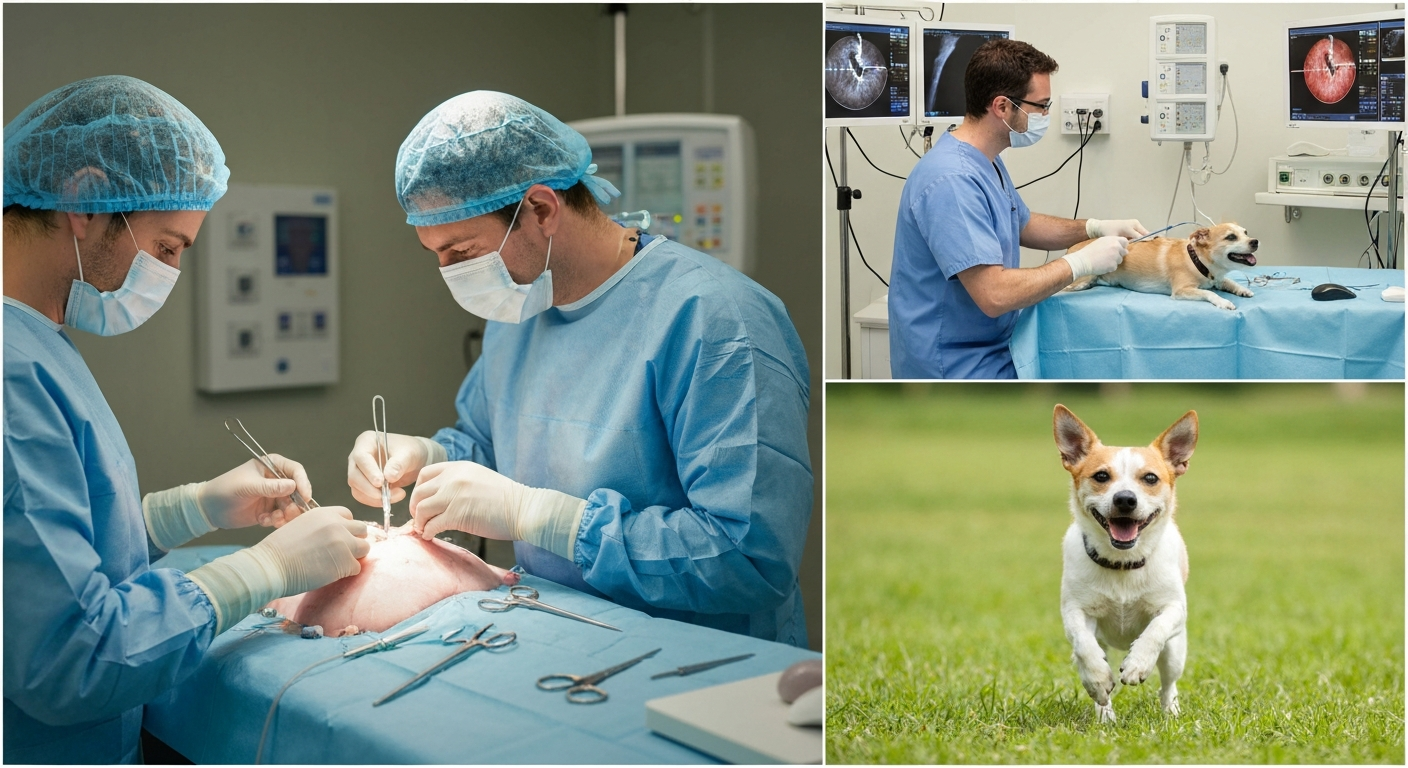
1. Surgical Ligation (Open-Chest Surgery): This traditional method involves a board-certified veterinary surgeon making an incision in the chest to directly access and tie off the patent ductus arteriosus with sutures. This permanently blocks the abnormal connection. It's often performed on younger, smaller pets or when the ductus is unusually shaped. 2. Catheter-Based Occlusion (Minimally Invasive): A specialist cardiologist inserts a thin catheter into a blood vessel (usually in the leg) and guides it to the PDA. Through the catheter, a device, such as an Amplatz Canine Ductal Occluder (ACDO), is deployed to block the ductus from the inside. This method is less invasive, resulting in a quicker recovery for suitable cases. It's often preferred for appropriately sized ductus structures and pets. Regardless of the method, the goal is to permanently close the abnormal vessel, restoring normal blood flow.
"Persistence of a normal fetal structure (ductus arteriosus) after birth allows for shunting of blood from the descending aorta to the pulmonary artery, leading to volume overload and, subsequently, left-sided heart failure." — Sandra P. Tou, DVM, DACVIM-Cardiology, DACVIM-SAIM, Merck Veterinary Manual
When this surgery is recommended
PDA closure is strongly recommended as soon as a patent ductus arteriosus is diagnosed, ideally in young puppies and kittens, to prevent irreversible heart damage. A PDA is typically identified by a distinctive, continuous 'machinery-like' heart murmur heard during a routine veterinary exam, often in very young animals. This murmur is a hallmark sign.
"A distinctive, continuous, loud murmur, reminiscent of a washing machine, is heard on the left side of the chest." — ACVS (American College of Veterinary Surgeons)
Many affected pets may not show obvious clinical signs early on, but without intervention, most will develop signs of left-sided congestive heart failure within the first one to two years of life. These signs can include difficulty breathing, coughing, exercise intolerance, and failure to grow normally. Early diagnosis and intervention are critical because the prolonged strain on the heart can lead to permanent changes that limit life expectancy, even with successful closure.
How does a veterinarian decide if PDA closure is right for my pet?
Diagnosis usually begins with a physical exam and listening to the heart. Your primary veterinarian will likely refer you to a board-certified veterinary cardiologist for further evaluation. The cardiologist will perform an echocardiogram (an ultrasound of the heart) to confirm the diagnosis, assess the size and shape of the PDA, measure the heart chambers, and look for any other congenital abnormalities. This detailed imaging helps determine if the PDA is suitable for catheter-based occlusion or if traditional surgical ligation is the best approach. They will also assess the overall health of your pet, including lung status, to ensure they are a good candidate for the procedure. In rare cases, if a right-to-left PDA has developed (where blood flows in the opposite direction due to very high lung pressures), closing the PDA can be fatal, making a precise diagnosis by a specialist absolutely essential.
Are there alternatives to PDA closure?
For most left-to-right shunting PDAs, surgical or interventional closure is the only effective long-term treatment. Medical management with medications might be used to stabilize a pet experiencing heart failure before surgery or to manage symptoms in pets where closure is not an option (e.g., a reverse PDA), but it does not correct the underlying defect. Without closure, the heart will continue to suffer progressive damage.
What it costs in the United States
The cost for PDA closure in the United States typically ranges from USD 3,000 to USD 6,500, but can vary significantly based on several factors. This national average encompasses both traditional surgical ligation and minimally invasive catheter-based occlusion. It's important to remember this is an estimate, and the actual cost can differ.
Several factors influence where your pet's procedure falls within this range. The choice between open-chest surgery and catheter-based intervention is a major driver; while catheter procedures are often less invasive, the specialized equipment and devices (like an ACDO) can sometimes make them comparable or even slightly more expensive than traditional surgery. Geographic location also plays a role, with clinics in major metropolitan areas often having higher overheads. The severity of your pet's condition, the presence of any concurrent health issues, and the need for extensive pre-operative diagnostics (such as advanced echocardiography or CT scans) or post-operative care can also impact the final bill. The expertise of the veterinary specialist performing the procedure, whether a board-certified surgeon or cardiologist, also contributes to the cost. This estimate generally covers the procedure itself, anesthesia, hospitalization, and initial follow-up appointments, but additional medications or specialized post-operative rehabilitation might be separate.
Risks and contraindications
While PDA closure is generally a safe and highly successful procedure, like any surgery or intervention, it carries potential risks, and certain conditions may contraindicate its performance. Your veterinary specialist will thoroughly evaluate your pet to determine the safest and most effective course of action.
General risks associated with anesthesia and surgery include adverse reactions to medications, bleeding, infection at the surgical site, and complications during recovery. Specific to PDA closure, potential risks include device migration or embolization (for catheter-based closure), damage to surrounding vessels or nerves, and persistent abnormal blood flow if the closure is incomplete. In rare cases, severe arrhythmias or even sudden death can occur during or immediately after the procedure, although these are uncommon.
There are also specific situations where PDA closure is not recommended:
- A right-to-left ("reversed") PDA: This occurs when severe pulmonary hypertension causes blood to flow from the pulmonary artery into the aorta. Closing such a PDA can be fatal, as it would severely restrict blood flow to the body. Accurate diagnosis by a cardiologist is essential to rule out this rare but critical condition.
- Advanced heart failure: If your pet is in severe, advanced heart failure, they will need to be stabilized with medication before the procedure. Attempting closure on an unstable patient carries a much higher risk.
- Age and vessel characteristics: While closure is ideally done young, before the heart suffers significant enlargement, the specific size and shape of the ductus arteriosus determine whether a catheter device can be safely used or if open surgical ligation is necessary. Very small or unusually shaped PDAs might present challenges for either method.
Recovery
Recovery from PDA closure typically involves a period of rest and careful monitoring, with most pets showing significant improvement within days to weeks. The recovery timeline can vary slightly depending on the method of closure (surgical ligation vs. catheter-based) and the individual pet's overall health and pre-existing heart damage.
What should I expect immediately after PDA surgery?
For surgical ligation, your pet will likely stay in the hospital for 1-3 days for pain management and close monitoring. For catheter-based occlusion, hospitalization might be shorter, often just overnight. Regardless of the method, your pet will need to be kept quiet and calm immediately after discharge. Expect some soreness or discomfort, managed with prescribed pain medication. Your veterinary team will provide detailed instructions for wound care (if surgical) and activity restrictions.
What is the recovery timeline for PDA closure?
- Week 1: Strict rest is crucial. leash walks only for bathroom breaks, no running, jumping, or strenuous play. Monitor incision site daily for signs of infection (redness, swelling, discharge) if surgical. Appetite should return to normal. Your pet may be tired initially.
- Weeks 2-4: Gradual increase in activity, but still no vigorous play or off-leash activities. Short, controlled walks are typically fine. Your vet may recommend a recheck appointment to assess healing and heart function.
- Weeks 4-8: Most pets can return to normal activity levels during this period, provided they have fully recovered and your cardiologist gives the green light. A follow-up echocardiogram is often recommended around 4-8 weeks post-procedure to confirm successful closure and assess heart remodeling. Many pets will have a significantly improved quality of life and reduced murmur intensity.
Will my pet need rehabilitation after PDA closure?
While formal rehabilitation isn't always necessary for PDA closure, some pets, particularly those who were severely deconditioned before surgery or had significant lung issues, might benefit from a structured, gradual exercise program tailored by your veterinarian or a veterinary physical therapist. This would focus on slowly building stamina and muscle strength. Most pets, however, simply need a period of restricted activity followed by a gradual return to normal play. It's vital to follow your specialist's specific recommendations to ensure a smooth and complete recovery.
When to seek emergency care
While recovery from PDA closure is generally smooth, it's critical to know when to seek immediate veterinary attention for your pet, as certain signs can indicate serious complications. Do not hesitate to contact your veterinarian or a veterinary emergency clinic if you observe any of the following:
- Fast or labored breathing, or breathing distress (immediate concern): This could indicate fluid in the lungs (congestive heart failure), a collapsed lung, or other severe respiratory issues. Look for exaggerated chest movements, panting when at rest, or an inability to get comfortable.
- Fainting or collapse (immediate concern): Any episode of weakness, sudden falling over, or unconsciousness is an emergency and requires immediate veterinary attention. This could be due to severe arrhythmias, persistent heart issues, or other complications.
- Poor growth, tiring easily, or a persistent cough in a young pet (within 24 hours): While these can be signs of the original PDA, if they persist or worsen after closure, they might indicate incomplete closure, developing heart failure, or other post-operative issues. Do not delay seeking professional advice.
- Sudden onset of severe lethargy or unwillingness to move (immediate concern): While some mild lethargy is normal post-surgery, a sudden, profound lack of energy or inability to stand up could signal pain, infection, or internal bleeding.
- Excessive bleeding or discharge from a surgical incision (immediate concern): A small amount of redness or oozing is normal, but significant bleeding, foul-smelling discharge, or the incision opening up requires urgent veterinary assessment.
How to find a specialist
Finding a board-certified veterinary specialist is paramount for successful PDA diagnosis and closure, ensuring your pet receives the highest standard of care. PDA closure involves complex cardiac anatomy and physiology, making the expertise of a specialist invaluable.
For diagnosis and catheter-based occlusion, you'll need to consult a board-certified veterinary cardiologist (DACVIM-Cardiology). For surgical ligation, a board-certified veterinary surgeon (DACVS) is the expert. These specialists have undergone extensive additional training, residency programs, and rigorous examinations beyond veterinary school to achieve certification in their respective fields.
When seeking a specialist, start by asking your primary care veterinarian for a referral. They often have established relationships with local specialists. You can also use online directories provided by organizations like the American College of Veterinary Internal Medicine (ACVIM) for cardiologists or the American College of Veterinary Surgeons (ACVS) for surgeons. These directories allow you to search for board-certified specialists in your area. When you find a potential specialist, don't hesitate to ask them about their experience with PDA cases, their preferred methods of closure, and what outcomes you can expect. A good specialist will be transparent and willing to answer all your questions, helping you feel confident in your pet's care.
Who isn't a candidate
- Concurrent condition: A right-to-left ("reversed") PDA — where pressures have already flipped — is generally NOT closed; closing it can be fatal, so accurate diagnosis by a cardiologist is essential first.
- Concurrent condition: Advanced heart failure is stabilised with medication before the procedure.
- Age: Closure is ideally done young, before the heart enlarges — but the vessel's size and shape determine whether a catheter device or open surgical ligation is used.
Common questions
What is a patent ductus arteriosus?
A patent ductus arteriosus (PDA) is a congenital heart defect where a specific blood vessel, the ductus arteriosus, fails to close after birth. This vessel, which is normal in fetal development, should scar over and disappear shortly after a puppy or kitten is born. When it remains open, it causes abnormal blood flow between the aorta and pulmonary artery, overloading the heart and lungs.
Source ↗How much does PDA surgery cost for a dog?
The cost for PDA closure in dogs in the United States typically ranges from USD 3,000 to USD 6,500. This estimate can vary based on the method of closure (surgical ligation vs. catheter-based), the complexity of the case, geographic location, and the need for extensive pre- or post-operative care.
What happens if a PDA is not treated?
If a PDA is left untreated, the continuous abnormal blood flow will progressively overload the left side of the heart and the lungs. This eventually leads to enlargement of the heart chambers and, in most cases, the development of left-sided congestive heart failure within the first one to two years of life. Without intervention, the condition is usually fatal.
Source ↗Which breeds are prone to PDA?
Certain dog breeds have an increased risk for developing PDA, including the Maltese, Pomeranian, Shetland Sheepdog, English Cocker Spaniel, American Cocker Spaniel, Keeshond, Bichon Frise, German Shepherd, Border Collie, Irish Setter, Kerry Blue Terrier, Labrador Retriever, Newfoundland, Miniature and Toy Poodle, Chihuahua, and Yorkshire Terrier. PDA also occurs more frequently in female dogs.
Source ↗Is PDA closed with a catheter or open surgery?
PDA can be closed using either a traditional open-chest surgical ligation or a minimally invasive catheter-based occlusion. The choice depends on factors like the size and shape of the PDA, the pet's age and health, and the specialist's recommendation. Catheter-based methods often use devices like the Amplatz Canine Ductal Occluder (ACDO).
Source ↗Sources
- · Merck Veterinary Manual View source ↗
- · ACVS View source ↗
Looking for a specific clinic? Browse our directory of specialist veterinary practices.