Bottom Line
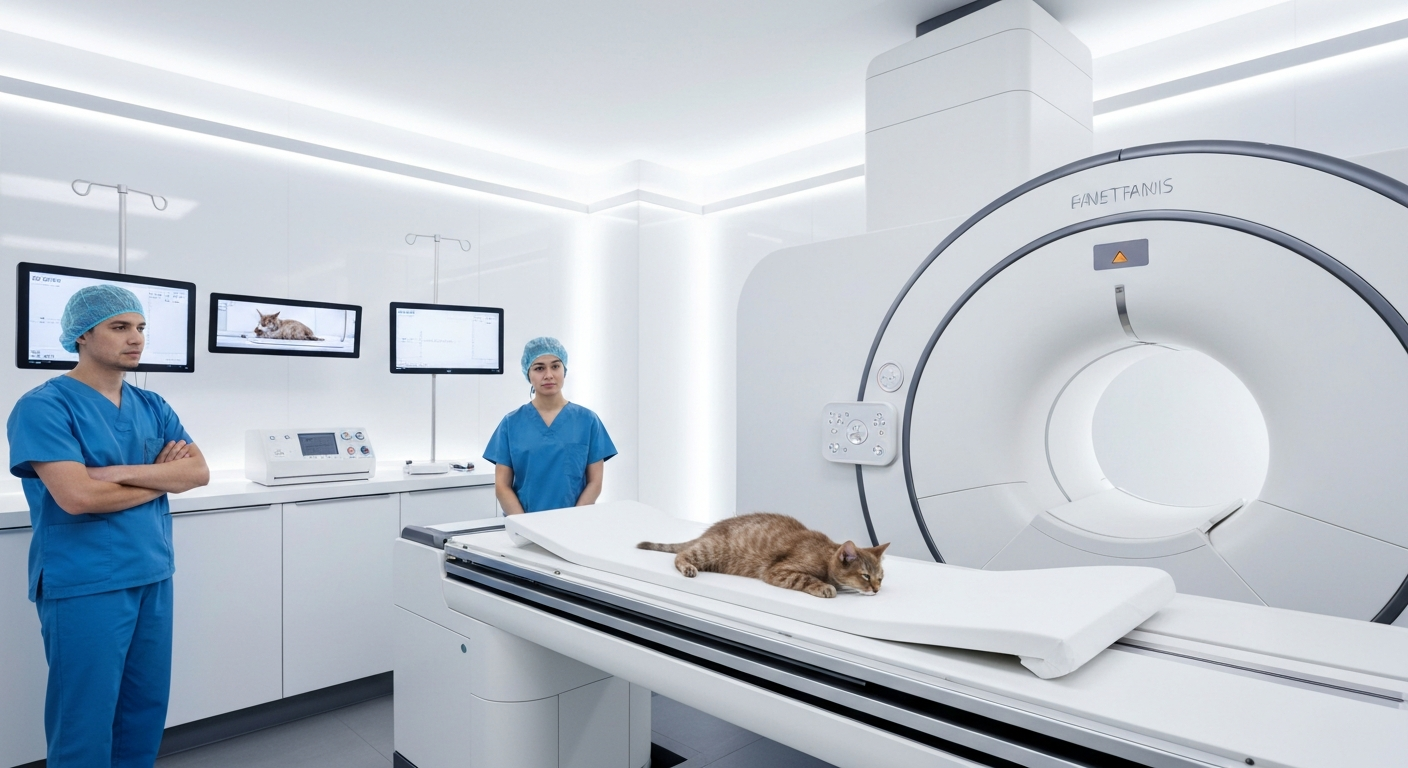
A veterinary MRI (Magnetic Resonance Imaging) is a powerful diagnostic tool that provides highly detailed images of your pet's soft tissues, particularly the brain, spinal cord, and joints. It's often recommended for diagnosing complex neurological issues or other conditions not visible with standard X-rays or ultrasound, helping specialists plan the best course of treatment for your beloved dog or cat.
What the procedure involves
A pet MRI uses a strong magnetic field and radio waves to generate incredibly detailed cross-sectional images of the body, offering an unparalleled view of soft tissues like the brain, spinal cord, nerves, muscles, and ligaments. Unlike X-rays or CT scans, an MRI does not use ionizing radiation, making it a different kind of imaging modality. During the procedure, your pet will be carefully positioned on a specialized table that slides into a large, tube-shaped machine. The machine then creates a powerful magnetic field and emits radio waves, which temporarily realign water molecules within your pet's body. As these molecules return to their original alignment, they release energy signals that are detected by the MRI scanner. A sophisticated computer system then translates these signals into detailed images that a veterinary radiologist can interpret. Because any movement can blur these intricate images, pets must be completely still throughout the scan. This means that general anesthesia is always required for an MRI. A dedicated veterinary anesthesia team monitors your pet's vital signs—like heart rate, breathing, and body temperature—continuously during the entire procedure to ensure their safety and comfort. The entire process, from induction of anesthesia to recovery, typically takes several hours, though the actual scan time can vary based on the area being imaged.
When this surgery is recommended
MRI is often recommended when other diagnostic tools haven't provided a clear answer, especially for complex conditions affecting your pet's nervous system or soft tissues. If your dog or cat is experiencing symptoms like sudden paralysis, unexplained seizures, chronic pain, or difficulty walking, an MRI can be invaluable. It excels at visualizing conditions such as brain tumors, spinal cord compression (like intervertebral disc disease), inflammation in the brain or spinal cord, nerve damage, and certain joint issues that involve ligaments or cartilage. When your veterinarian suspects a problem within these areas, they'll likely refer you to a board-certified veterinary neurologist or radiologist to discuss whether an MRI is the most appropriate next step. While X-rays show bones well and CT scans are excellent for bone detail and some soft tissue structures, MRI provides superior contrast and resolution for many soft tissue pathologies, making it the gold standard for neurological diagnostics. Sometimes, a CT scan might be performed first to rule out certain conditions or to provide complementary information, but for intricate soft tissue details, MRI often provides the definitive diagnosis. Your specialist will weigh the benefits of an MRI against potential risks and discuss alternative diagnostic pathways with you.
What it costs in the United States
An MRI for your dog or cat in the United States typically ranges from USD 2000 to USD 3500, reflecting the high level of specialized equipment, expertise, and care involved. This price range accounts for several key factors that influence the final bill. Firstly, the cost includes the use of the highly advanced MRI machine itself, which is a significant investment for veterinary hospitals and specialty clinics. Secondly, the procedure requires a team of highly trained professionals: a board-certified veterinary radiologist to interpret the complex images, a veterinary neurologist or other specialist to guide the diagnostic process, and a skilled veterinary anesthesia team to ensure your pet's safety during the scan. Anesthesia monitoring, pre-anesthetic blood work, intravenous fluids, and recovery care are all built into the overall cost. The specific body part being scanned (e.g., brain, spine, or a joint) can also affect the price, as different areas may require varying scan times and specialized imaging protocols. Finally, geographic location and the specific veterinary facility's pricing structure can cause some variation within the national average.
Risks and contraindications
While MRI is generally considered a safe diagnostic tool, it does carry some risks, primarily related to the necessary use of general anesthesia, and has specific contraindications. The most common risks are associated with anesthesia, such as adverse reactions to medications or complications during monitoring. However, a dedicated anesthesia team carefully assesses each patient and monitors vital signs throughout the procedure to minimize these risks. It's crucial for your veterinary team to have a complete medical history for your pet.
Contraindications that would prevent an MRI include:
- MRI requires general anesthesia (the patient must be perfectly still), so significant anesthetic risk is weighed and stabilized first. Pets with severe heart, lung, or kidney disease might need extensive stabilization or alternative diagnostic approaches if anesthesia is deemed too risky.
- Certain metal implants or devices can be unsafe in the magnet — these are screened for before scanning. This includes pacemakers, internal fixation devices (plates, screws, pins) from previous surgeries, microchips that are not MRI-compatible, or even certain types of tattoos or shrapnel. These items can heat up, move, or interfere with the magnetic field, posing a danger to your pet or distorting the images.
Before scheduling an MRI, your veterinary team will conduct a thorough physical exam and review your pet's medical history to identify any potential risks or contraindications, ensuring the procedure is as safe as possible.
Recovery
Recovery from a veterinary MRI primarily involves waking up safely from general anesthesia and then adhering to a period of rest and monitoring at home. Since the MRI itself is non-invasive, the main focus is on the anesthetic recovery, which is closely supervised by the veterinary team. Your pet will typically be groggy and a bit disoriented immediately after waking up.
What happens immediately after the MRI?
Immediately following the scan, your pet will be moved to a warm, quiet recovery area where veterinary technicians will continuously monitor their vital signs, pain levels, and neurological status as they wake up. They will ensure your pet is comfortable and stable before discharge. Most pets can go home the same day, typically once they are fully awake and can walk without significant assistance.
What should I expect during the first few days at home?
For the first 24-48 hours at home, expect your pet to be sleepier than usual due to the lingering effects of anesthesia. They may have a reduced appetite or seem a little
Who isn't a candidate
- Concurrent condition: MRI requires general anesthesia (the patient must be perfectly still), so significant anesthetic risk is weighed and stabilised first.
- Concurrent condition: Certain metal implants or devices can be unsafe in the magnet — these are screened for before scanning.
Common questions
How much does an MRI cost for a dog or cat?
In the United States, a veterinary MRI for a dog or cat typically ranges from USD 2000 to USD 3500. This cost includes the use of specialized equipment, the expertise of board-certified radiologists and neurologists, anesthesia, and comprehensive monitoring during the procedure.
Why does a pet MRI require anesthesia?
An MRI requires your pet to remain perfectly still for an extended period, often 30 to 90 minutes, to ensure the production of clear, detailed images. Any movement can blur the scan, making interpretation difficult or impossible. General anesthesia ensures your pet is completely immobile, comfortable, and stress-free throughout the imaging process.
When does a dog need an MRI versus a CT scan?
An MRI is generally preferred for detailed imaging of soft tissues, such as the brain, spinal cord, nerves, and ligaments, making it the gold standard for diagnosing many neurological conditions. A CT scan, while also producing cross-sectional images, excels at visualizing bony structures and can be faster. Your specialist will recommend the best imaging modality based on the specific condition being investigated.
What conditions can an MRI diagnose in pets?
An MRI can diagnose a wide range of conditions, particularly those affecting the nervous system. This includes brain tumors, intervertebral disc disease (spinal compression), inflammation of the brain or spinal cord, hydrocephalus, nerve root tumors, and certain joint and soft tissue injuries that are not visible on X-rays or CT scans.
Is an MRI safe for my dog or cat?
Yes, an MRI is generally safe for pets. The primary risk is associated with the general anesthesia required for the procedure. However, a dedicated veterinary anesthesia team carefully assesses your pet's health, monitors their vital signs continuously, and manages any potential risks to ensure their safety and comfort throughout the scan and recovery period. A thorough screening for metal implants is also performed to prevent complications related to the magnetic field.
Sources
- · ACVR.org View source ↗
Looking for a specific clinic? Browse our directory of specialist veterinary practices.