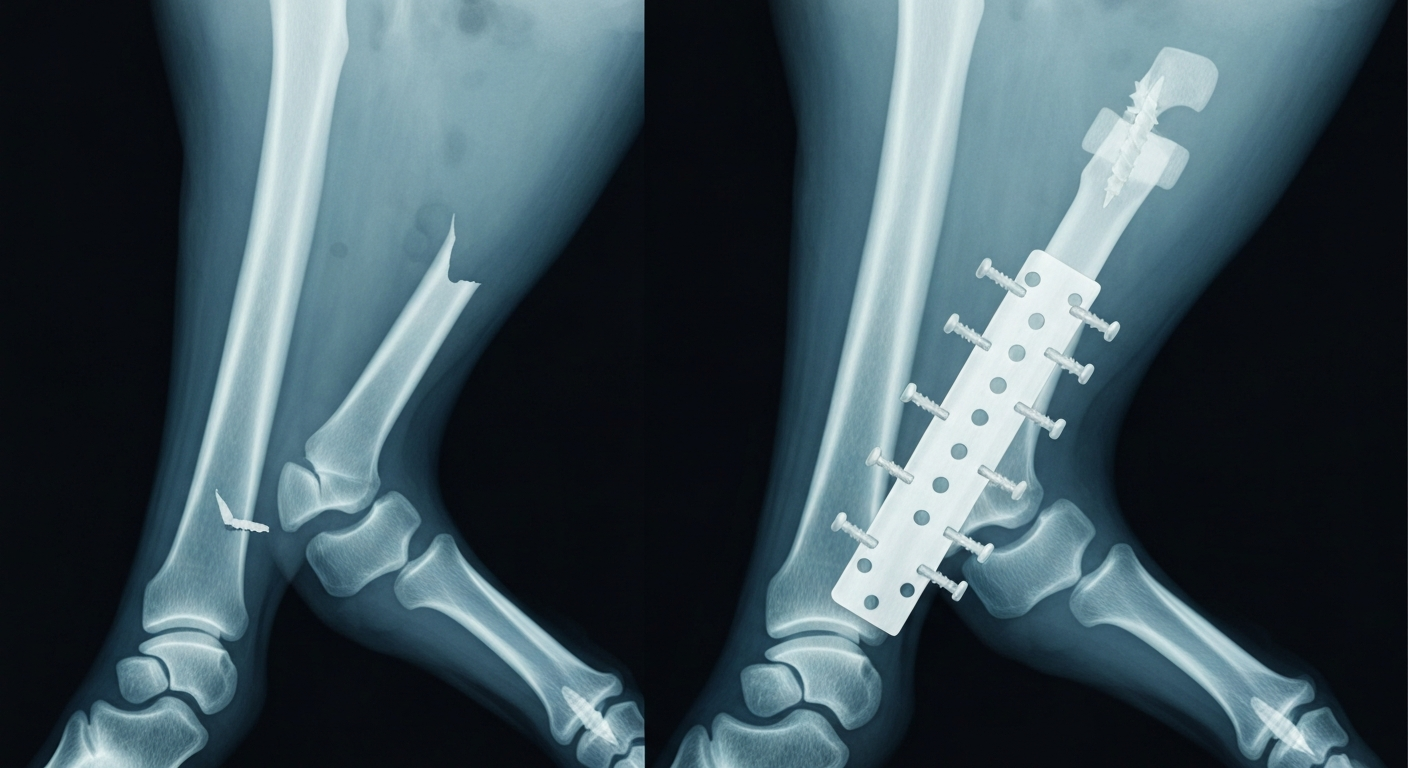
## Bottom Line Fracture repair, often called Open Reduction Internal Fixation (ORIF), is a surgical procedure to meticulously realign and stabilize broken bones in pets, allowing them to heal correctly and restore full function to the affected limb.
## What the procedure involves Open Reduction Internal Fixation (ORIF) is a precise surgical technique designed to mend your pet's broken bone, restoring its natural alignment and stability. When a bone breaks, it can displace, meaning the ends are no longer properly aligned. "Open Reduction" refers to the surgical incision made to expose the fracture site, allowing the veterinary orthopedic surgeon to directly view and manually reposition the bone fragments into their correct anatomical position. This is a critical step to ensure the limb heals with proper function and without lasting deformity.
Once the bone fragments are perfectly aligned, "Internal Fixation" comes into play. This involves implanting specialized medical devices directly onto or into the bone to hold the fragments securely in place while they heal. The most common internal fixation methods include metal plates secured with screws, pins (long rods inserted into the bone marrow cavity), wires, or a combination of these. For example, a bone plate might be carefully contoured to fit the bone's surface and then attached with multiple screws on either side of the fracture line. Pins, often called K-wires or Steinman pins, might be used to stabilize smaller fragments or run down the center of long bones. The choice of implant depends heavily on the type of fracture, the bone involved, your pet's size and activity level, and the surgeon's preference. The goal is to create a stable environment that encourages the bone to knit back together strongly and reliably.
## When this surgery is recommended Fracture repair surgery is often recommended for pets with significant bone breaks that are unlikely to heal properly on their own or would result in poor limb function without intervention. While some minor fractures, particularly in young animals, might heal with strict external splinting or casting, most complex or unstable fractures require surgical stabilization. Decision factors often hinge on the location and type of fracture. Fractures in major weight-bearing bones, fractures involving joints, or those with multiple fragments (comminuted fractures) almost always benefit from surgical repair to ensure optimal recovery and prevent long-term lameness or arthritis.
### When might a non-surgical approach be considered? Non-surgical management, usually involving splints or casts, is typically reserved for very stable fractures, like certain hairline breaks, or fractures in young animals where the bone healing potential is very high. It's also an option for fractures below the elbow or knee, as these areas are easier to immobilize effectively. However, casts require diligent monitoring, frequent changes, and can lead to complications such as skin sores or joint stiffness if not managed correctly. Your veterinary orthopedic surgeon will carefully evaluate the fracture through X-rays and a physical exam to determine if non-surgical options are viable and appropriate for your pet.
### Are there alternatives to internal fixation? Sometimes, an external fixator might be used as an alternative or in combination with internal fixation. An external fixator involves pins inserted through the skin and bone, connected to an external frame outside the limb. This is often chosen for open fractures where there's significant soft tissue damage, allowing for easier wound access and management. However, for most closed, stable fractures, internal fixation is preferred due to its ability to provide strong, precise stabilization and allow for earlier weight-bearing.
## What it costs in the United States The cost for fracture repair (ORIF) in dogs and cats in the United States typically ranges from USD 2,500 to USD 6,000, reflecting a national average that can vary significantly. This range accounts for several factors that influence the overall expense. The complexity of the fracture is a primary driver; a simple, clean break will generally cost less to repair than a comminuted (multiple pieces) or intra-articular (involving a joint) fracture, which requires more specialized techniques and longer surgical time. The specific bone involved also plays a role; a femoral (thigh bone) fracture, for example, often demands more extensive surgery than a toe fracture.
Geographic location is another major factor, with costs often higher in metropolitan areas or regions with a higher cost of living. The size and weight of your pet can influence anesthesia and medication dosages, as well as the size and number of implants needed, impacting the final bill. Furthermore, the type of clinic, whether a general practice with orthopedic capabilities or a specialized veterinary surgery center, can affect pricing. A board-certified veterinary orthopedic surgeon, while offering the highest level of expertise, may have higher fees. The quoted cost usually includes pre-surgical diagnostics (X-rays, blood work), anesthesia, the surgery itself, post-operative pain management, and initial hospitalization. It's crucial to get a detailed estimate from your veterinary surgeon before the procedure.
"The ultimate goal of fracture repair is to achieve rapid, comfortable union of the bone, allowing for early return to function and preventing long-term complications like arthritis." — American College of Veterinary Surgeons, ACVS Fact Sheet: Fracture Repair
## Risks and contraindications While fracture repair surgery is generally safe and highly effective, like any surgical procedure, it carries potential risks and is not appropriate for every patient. Anesthesia always presents a small risk, though modern veterinary anesthetic protocols are very safe and tailored to each pet's individual health. Post-operative complications can include infection at the surgical site, implant failure (where the plate or pins break or loosen), delayed healing (non-union), or malunion (healing in an incorrect position). Careful surgical technique, appropriate antibiotic use, and strict post-operative care are essential to minimize these risks.
Certain conditions may make surgery more risky or even contraindicate the procedure: Life-threatening injuries take priority: After trauma (like being hit by a car or a fall), conditions such as chest and abdominal injuries, shock, and significant blood loss must be stabilized first. The fracture repair will only proceed once your pet is stable enough for anesthesia. Severe open (compound) fractures: Fractures where the bone breaks through the skin, especially with contamination or dead tissue, may require initial wound management and antibiotics before definitive fixation can be performed. This helps reduce the risk of deep infection. Growth-plate fractures in young animals: Fractures involving the growth plates (epiphyseal plates) in growing puppies and kittens require specific surgical techniques to avoid causing limb-growth deformities as the animal matures. These cases need very careful consideration and specialized surgical approaches. Significant underlying health issues: Pets with severe heart, kidney, or liver disease, or uncontrolled endocrine disorders, may not be good candidates for extensive surgery due to increased anesthetic risk and impaired healing capacity.
"Proper patient assessment, including thorough radiographic evaluation and consideration of the pet's overall health, is paramount before undertaking any complex orthopedic surgery." — American College of Veterinary Surgeons, ACVS Small Animal Surgery Information
## Recovery Recovery from fracture repair surgery is a gradual process that requires patience, strict adherence to post-operative instructions, and often dedicated rehabilitation to ensure the best possible outcome. Immediately after surgery, your pet will likely stay overnight or for a few days in the hospital for pain management and monitoring. They will typically go home with pain medication, anti-inflammatory drugs, and sometimes antibiotics. A bandage or splint may be in place initially, and your pet will need to be kept quiet and calm.
### What should I expect in the first few weeks after surgery? During the first 2-4 weeks, activity restriction is paramount. This means no running, jumping, stairs, or rough play. Walks should be short, controlled, and on a leash, primarily for potty breaks. Your pet may bear some weight on the limb, but full weight-bearing might take longer. Sling support might be recommended, especially for hind limb fractures, to prevent excessive weight on the healing bone. Regular bandage changes, if applicable, and incision checks are crucial to prevent infection. Your vet will schedule follow-up appointments, often including X-rays, to monitor healing progress.
### What about rehabilitation and long-term recovery? Between 4-8 weeks, if X-rays show good healing, your vet will gradually increase activity levels. This might involve longer, controlled leash walks and gentle exercises. Physical rehabilitation, such as passive range of motion exercises, therapeutic exercises, and even hydrotherapy, can be incredibly beneficial. It helps improve muscle strength, joint flexibility, and overall limb function, significantly speeding up recovery. Your vet or a certified veterinary rehabilitation specialist will guide you through these steps. Full bone healing can take anywhere from 8-12 weeks, or even longer for very complex fractures or older animals.
### Will the implants need to be removed? In many cases, the internal fixation implants (plates, screws, pins) are left in permanently unless they cause problems. Issues might include irritation of soft tissues, infection, or if the implant breaks. If removal is necessary, it's typically done after the bone has fully healed and is strong enough to bear weight on its own, usually several months to a year after the initial surgery. This involves a second, less invasive surgical procedure.
"Post-operative physical rehabilitation, even simple controlled exercises, plays a vital role in restoring muscle mass, joint mobility, and achieving the best possible functional outcome after fracture surgery." — American College of Veterinary Surgeons, ACVS Patient Care Guidelines
## When to seek emergency care Knowing when to seek emergency veterinary care after fracture repair is crucial for your pet's well-being and to prevent complications. While some mild discomfort is normal, certain signs indicate a serious issue that requires immediate attention.
Contact your veterinary surgeon or an emergency veterinary clinic immediately if you observe any of the following: Immediate (within hours to days): Non-weight-bearing lameness or a visibly deformed/dangling limb after trauma – if not yet repaired, this signals an urgent fracture. A wound with bone visible through the skin (open fracture) – this requires immediate, intensive veterinary care to prevent severe infection. Difficulty breathing, pale gums, or collapse after being hit by a car – these are signs of life-threatening internal injuries that must be addressed before the fracture. Urgent (within days): Severe, unmanageable pain that isn't controlled by prescribed medications. Excessive swelling, redness, or heat around the surgical site. Any discharge (pus or foul-smelling fluid) from the incision. The bandage or splint becoming wet, slipping off, or causing severe irritation/swelling of the toes. Your pet is unwilling to use the limb at all, or suddenly stops using it after initial improvement. * Lethargy, loss of appetite, or vomiting, which could indicate a systemic infection or other serious complication.
## How to find a specialist Finding a board-certified veterinary orthopedic surgeon is the best way to ensure your pet receives the highest standard of care for fracture repair. These specialists have undergone extensive additional training beyond veterinary school, including a residency program, and have passed rigorous examinations to earn their board certification. This specialized training equips them with advanced knowledge and surgical skills specifically for musculoskeletal conditions.
When looking for a specialist, you can start by asking your primary care veterinarian for a referral. They often have trusted colleagues they recommend. You can also search online directories provided by organizations like the American College of Veterinary Surgeons (ACVS). When you contact a specialist clinic, don't hesitate to ask about the surgeon's experience with your pet's specific type of fracture, their approach to pain management, and what rehabilitation resources they recommend or provide. A good specialist will be transparent about expected outcomes, potential risks, and the overall treatment plan, ensuring you feel confident and informed every step of the way.
Who isn't a candidate
- Concurrent condition: Life-threatening injuries take priority — after trauma (hit by car, a fall), chest and abdominal injuries, shock, and blood loss are stabilised first; the fracture is repaired once the patient is safe for anesthesia.
- Concurrent condition: Severe open (compound) fractures with contamination or dead tissue may need wound management and antibiotics before definitive fixation.
- Age: Growth-plate fractures in young animals need specific techniques to avoid limb-growth deformity.
Common questions
What is the typical cost of fracture repair surgery for pets?
The cost of fracture repair surgery for dogs and cats in the US generally ranges from USD 2,500 to USD 6,000. This price can vary based on the fracture's complexity, the specific bone involved, your pet's size, geographic location, and whether a specialist surgeon is involved. It typically covers diagnostics, surgery, anesthesia, pain management, and initial hospitalization.
How long does it take for a pet's broken bone to heal after surgery?
Bone healing after fracture repair surgery typically takes 8 to 12 weeks, though it can be longer for very complex fractures, older pets, or those with underlying health conditions. Young animals often heal faster. Your veterinarian will use follow-up X-rays to confirm proper bone union before gradually increasing your pet's activity level.
What types of implants are used in pet fracture repair?
Common implants used in pet fracture repair include metal plates secured with screws, pins (rods inserted into the bone marrow), and wires. Sometimes, an external fixator, which involves pins connected to an external frame, is used, especially for open fractures. The choice of implant depends on the fracture type, bone, and individual patient needs.
Can my pet's broken bone heal without surgery?
Some minor, stable fractures, particularly in young animals or those below the elbow or knee, may heal with non-surgical methods like splints or casts. However, most complex, unstable, or weight-bearing bone fractures require surgical intervention to ensure proper alignment, stability, and optimal limb function, preventing long-term issues.
Are surgical implants always removed after fracture repair?
No, surgical implants like plates and screws are often left in permanently if they are not causing any problems. Removal is typically only necessary if there's an infection, soft tissue irritation, or if the implant breaks or loosens. If removal is needed, it's usually performed several months to a year after the initial surgery, once the bone is fully healed.
Source ↗Sources
- · ACVS Fact Sheet: Fracture Repair View source ↗
Looking for a specific clinic? Browse our directory of specialist veterinary practices.