Bottom Line
Cystotomy, or bladder stone surgery, is an urgent procedure to remove painful and potentially life-threatening urinary stones from your pet's bladder, restoring their ability to urinate freely and preventing serious complications. This surgery is often necessary when stones are too large to pass naturally, cannot be dissolved with special diets, or are causing a urinary obstruction, which is a medical emergency for dogs and cats.
What the procedure involves
Cystotomy is a surgical procedure where a veterinarian opens the bladder to directly remove urinary stones, known as uroliths, that are causing discomfort or obstruction. This procedure is performed under general anesthesia and is a definitive way to resolve the immediate problem of bladder stones.
First, your pet will undergo a thorough pre-surgical evaluation, including blood tests, urine analysis, and imaging (X-rays or ultrasound) to confirm the presence and location of the stones, and to assess your pet's overall health. Once your pet is deemed stable for anesthesia, they will be given sedatives and then an anesthetic agent. The surgical site, typically on the abdomen, will be carefully clipped and aseptically prepared to minimize infection risk.
The surgeon will make an incision in the abdomen to access the bladder. The bladder is then carefully isolated, and a small incision is made into its wall. Specialized instruments are used to meticulously remove all visible stones, which can range from tiny crystals to surprisingly large formations. The inside of the bladder is often flushed to ensure no small fragments or crystals remain. After stone removal, the bladder incision is meticulously closed with fine sutures. The abdominal layers are then closed in succession. The removed stones are typically sent to a specialized laboratory for analysis to determine their mineral composition (e.g., struvite, calcium oxalate), which is crucial for developing a long-term prevention strategy.
When this surgery is recommended
Cystotomy is recommended when bladder stones are causing significant pain, recurrent urinary tract infections, or, most critically, a urinary obstruction that prevents your pet from urinating. While some stone types can be managed medically, surgical removal is often the most direct and safest approach for immediate relief.
When are bladder stones considered a surgical emergency?
Urinary stones can physically block the urine flow, leading to a life-threatening urinary obstruction. If your pet is straining to urinate with little or no production, or shows signs like vomiting or lethargy, this is an immediate emergency. In such cases, surgery is often urgently needed after initial stabilization.
Can some stones be dissolved without surgery?
Some types of stones, particularly struvite stones, can sometimes be dissolved using prescription diets and antibiotics, especially if they are small and not causing an obstruction. However, this process takes time and requires strict adherence to the diet, and it's not effective for all stone types. Calcium oxalate stones, for example, typically cannot be dissolved and almost always require surgical removal or other interventional procedures. The decision for surgery versus medical management depends on the stone type, size, location, the severity of your pet's symptoms, and any underlying health conditions. Your veterinary specialist will discuss the best course of action based on a thorough diagnostic workup.
"The stone type is named after its mineral composition. The most common stones are struvite (magnesium ammonium phosphate), calcium oxalate, urate, cystine, and silica." -- American College of Veterinary Surgeons, Urolithiasis (https://www.acvs.org/small-animal/urolithiasis/)
What it costs in the United States
The typical cost for bladder stone surgery (cystotomy) in the United States ranges from $1,500 to $3,500, reflecting the complexity of the procedure and the comprehensive care involved. This range can vary significantly based on several factors, including your geographic location, the specific veterinary clinic or specialty hospital, and the individual needs of your pet.
The cost generally includes several components: pre-surgical diagnostics like blood work, urinalysis, X-rays, or ultrasound, which are essential for confirming the diagnosis and assessing surgical risk. It also covers the anesthesia, the surgeon's fees, operating room use, and the surgical supplies. Post-operative care, including pain medication, antibiotics, and an overnight stay or two in the hospital for monitoring, are also factored into the total. Additional costs might arise if there are complications, if specialized stone analysis is needed, or if your pet requires extensive critical care before or after the procedure, such as for a urinary obstruction. Choosing a board-certified veterinary surgeon, while potentially at the higher end of the cost spectrum, often brings peace of mind due to their specialized training and experience.
Risks and contraindications
While cystotomy is generally a safe and effective procedure, like any surgery, it carries potential risks, and certain conditions may make your pet a poor candidate for immediate surgery. Your veterinary team will thoroughly assess your pet to minimize these risks.
General anesthesia always carries a small risk, particularly for older pets or those with underlying health issues. Potential surgical complications include bleeding, infection at the surgical site, leakage from the bladder incision, or, rarely, damage to surrounding organs. Although rare, sometimes not all stone fragments are removed, necessitating further intervention. Long-term, there's always a risk of stones recurring if the underlying cause isn't properly managed with diet or medication.
Contraindications, or situations where surgery might be delayed or avoided, include: Some stone types (struvite) can dissolve on a prescription diet — a trial of medical dissolution may be tried first when the pet is stable and not obstructed. Untreated kidney disease or high potassium from an obstruction is stabilized before anesthesia. * A fully blocked, unable-to-urinate patient needs emergency unblocking (catheter/decompression) first; cystotomy follows once stable.
Your veterinary specialist will weigh these risks against the benefits of surgery for your pet's unique situation.
Recovery
After a cystotomy, your pet will typically recover well, but a period of careful monitoring and activity restriction is crucial to ensure proper healing and prevent complications. The recovery timeline usually spans several weeks, with gradual return to normal activities.
What does the immediate post-operative period look like?
Immediately after surgery, your pet will likely be kept in the hospital for 1-3 days for pain management, monitoring of their urination, and to ensure they are stable. They will receive pain medication and possibly antibiotics. It's common for pets to have some blood in their urine for a few days post-surgery, and they may seem a bit subdued.
What is the recovery timeline week-by-week?
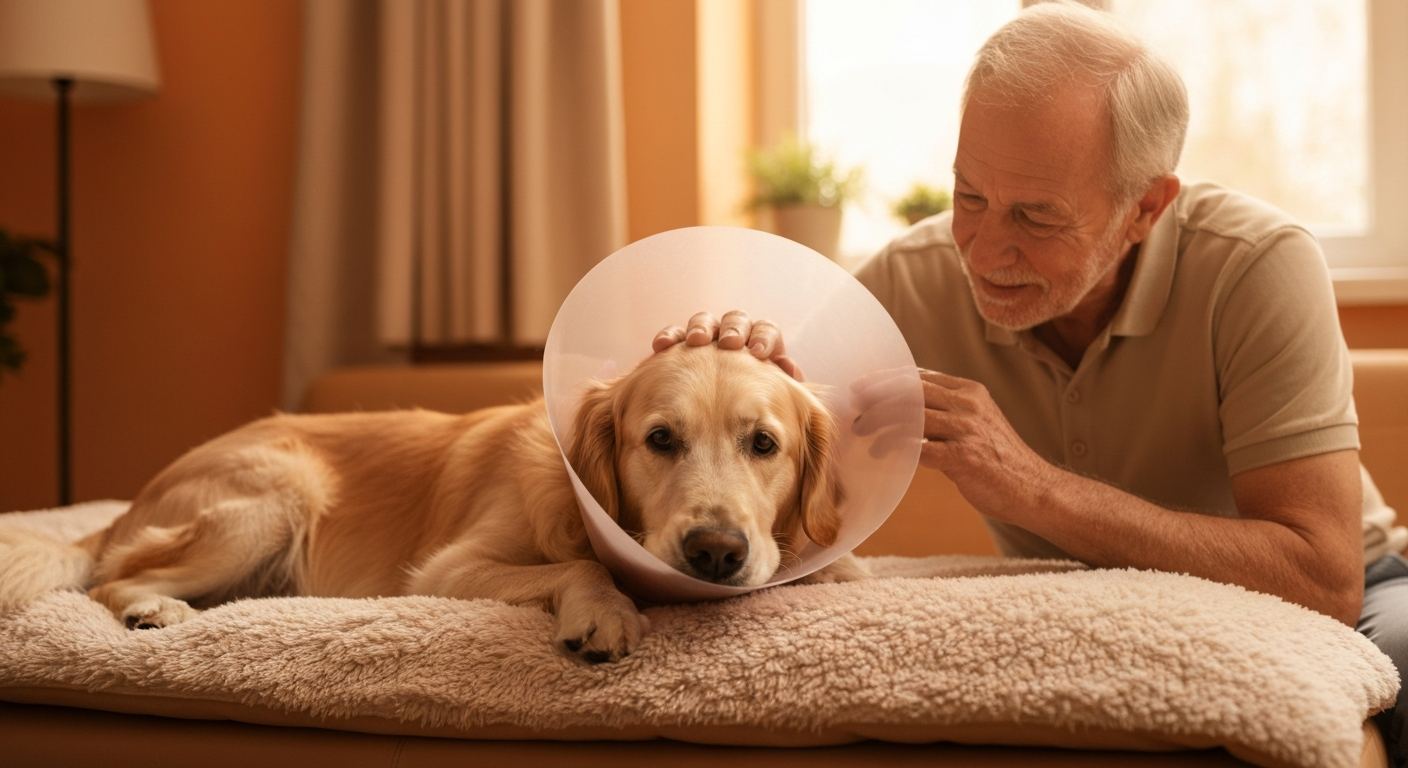
- Week 1: Focus on strict rest. Your pet should be confined to a small, comfortable area, limiting movement to short leash walks for potty breaks. Avoid stairs, jumping, or rough play. Keep the incision site clean and dry, and monitor for any signs of infection (redness, swelling, discharge) or if your pet is licking excessively. An Elizabethan collar (cone) is usually required to prevent licking.
- Weeks 2-4: Gradually increase activity, but still keep it controlled. Short, controlled walks can be extended slightly. Avoid off-leash activity or strenuous exercise. Most sutures or staples are removed around 10-14 days post-op if external.
- Weeks 5-6: By this point, most pets are cleared for a gradual return to normal activity levels, though your vet may recommend continued monitoring and specific dietary changes to prevent stone recurrence. A follow-up X-ray or ultrasound may be recommended to ensure no new stones are forming.
Will my pet need special care at home?
Yes, you'll need to administer prescribed medications (pain relievers, antibiotics) as directed. Monitor their appetite, water intake, and urination habits closely. Ensure they have easy access to fresh water at all times. Dietary changes, often involving a prescription urinary diet, are usually a long-term commitment to help prevent future stone formation.
When to seek emergency care
It's critical to know the signs that indicate an emergency after bladder stone surgery, as prompt veterinary attention can be life-saving. While some mild discomfort is normal, certain symptoms warrant immediate contact with your veterinarian or an emergency clinic.
Do not hesitate to seek immediate veterinary care if you observe any of the following: Straining to urinate but producing little or nothing (immediate): This is a red flag for a potential urinary obstruction, even after surgery. Crying out when urinating, or a firm painful belly (immediate): Indicates severe pain or a serious complication. Blood in the urine with repeated trips to the litter box or yard (urgent): While some blood is normal initially, excessive or persistent bleeding, especially with straining, is concerning. Vomiting, lethargy, or collapse in a pet that cannot urinate (immediate): These are signs of a severe systemic problem, potentially due to a blocked bladder leading to toxin buildup. Excessive swelling, redness, discharge, or opening of the surgical incision. Lack of appetite or refusal to drink water for more than 24 hours. * Persistent fever.
"Urinary stones may physically block the urine flow causing urinary obstruction that requires immediate emergency treatment." -- American College of Veterinary Surgeons, Urolithiasis (https://www.acvs.org/small-animal/urolithiasis/)
How to find a specialist
Finding a board-certified veterinary surgeon is highly recommended for complex procedures like cystotomy, ensuring your pet receives care from a highly trained expert. These specialists have undergone extensive additional training and rigorous examination beyond veterinary school.
When looking for a specialist, you can use online directories provided by organizations like the American College of Veterinary Surgeons (ACVS). Your primary veterinarian can also provide referrals. When you consult with a specialist, don't hesitate to ask about their experience with cystotomy procedures, their success rates, and what their post-operative care protocol entails. Ask about the types of stones they frequently encounter and their approach to long-term prevention. A good specialist will be transparent and willing to answer all your questions, making you feel confident in your pet's care.
"Signs of bladder stones may include: blood in the urine straining to urinate urinating small amount frequently abdominal discomfort urinary accidents" -- American College of Veterinary Surgeons, Urolithiasis (https://www.acvs.org/small-animal/urolithiasis/)
Who isn't a candidate
- Concurrent condition: Some stone types (struvite) can dissolve on a prescription diet — a trial of medical dissolution may be tried first when the pet is stable and not obstructed.
- Concurrent condition: Untreated kidney disease or high potassium from an obstruction is stabilised before anesthesia.
- Concurrent condition: A fully blocked, unable-to-urinate patient needs emergency unblocking (catheter/decompression) first; cystotomy follows once stable.
Common questions
How much does bladder stone surgery cost for a dog or cat?
The cost for bladder stone surgery (cystotomy) in the US typically ranges from $1,500 to $3,500. This estimate usually includes diagnostics, anesthesia, the surgery itself, hospitalization, and post-operative medications. Factors like your location and the complexity of your pet's case can influence the final price.
Can bladder stones be dissolved without surgery?
Yes, some types of bladder stones, particularly struvite stones, can often be dissolved using a specialized prescription diet and antibiotics. This approach is only viable if the stones are not causing a urinary obstruction and if your pet is stable. Calcium oxalate stones, however, generally do not dissolve with diet and usually require surgical removal.
How long is recovery after a cystotomy?
Most pets recover well from cystotomy within 4-6 weeks. The first week involves strict rest and pain management, followed by a gradual increase in controlled activity over the next few weeks. Full activity can typically resume after 5-6 weeks, with ongoing management through diet and monitoring to prevent recurrence.
What is the difference between struvite and calcium oxalate stones?
Struvite and calcium oxalate are the two most common types of bladder stones, differing in their mineral composition and how they are managed. Struvite stones are often associated with urinary tract infections and can frequently be dissolved with a special diet. Calcium oxalate stones are not typically dissolvable and often require surgical removal.
Source ↗Is a urinary blockage an emergency?
Absolutely, a urinary blockage is a life-threatening emergency for pets. If your dog or cat is straining to urinate but producing little to no urine, or shows signs of pain, vomiting, or lethargy, seek immediate veterinary care. This condition can lead to kidney damage and toxin buildup if not treated promptly.
Source ↗Sources
- · Urolithiasis View source ↗
Looking for a specific clinic? Browse our directory of specialist veterinary practices.