Bottom Line
Cherry eye surgery, or gland repositioning, is a common procedure for dogs and cats where the prolapsed gland of the third eyelid is carefully tucked back into its natural position, preserving vital tear production and preventing long-term eye health issues.
What the procedure involves
Cherry eye surgery is a careful and precise procedure designed to restore the third eyelid gland to its proper place, ensuring your pet's continued eye health.
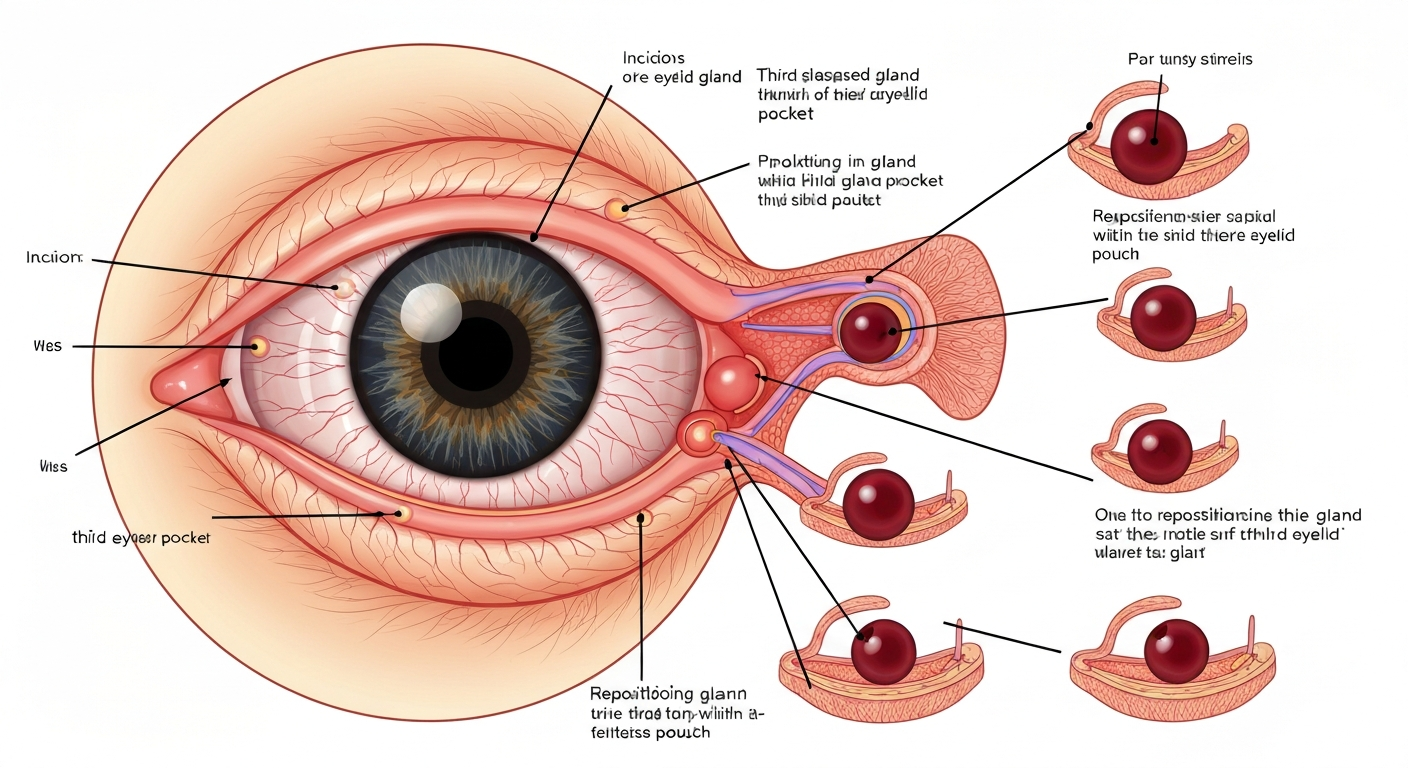
Dogs and cats possess a unique anatomical feature called the third eyelid, or nictitating membrane, which provides an extra layer of protection for the eye. Tucked within this eyelid is a crucial gland responsible for producing a significant portion of the eye's tears—up to 66%, in fact. When this gland prolapses, or "pops out," it becomes visible as a red or pink mass at the inner corner of your pet's eye, resembling a small cherry, hence the name "cherry eye."
The goal of surgery is not to remove this vital tear gland, but rather to reposition it back into its natural pocket. This is critical because removing the gland can severely compromise tear production, leading to a condition called Keratoconjunctivitis Sicca (KCS) or "dry eye," which requires lifelong medication. The most common surgical technique, often called the "pocket technique" or Morgan Pocket, involves creating a small pocket within the third eyelid tissue and carefully tucking the prolapsed gland inside, then suturing the tissue closed over it. This anchors the gland securely, allowing it to resume its essential tear-producing function without being exposed and irritated. The procedure is performed under general anesthesia, ensuring your pet's comfort and stillness throughout. Fine surgical instruments and dissolvable sutures are typically used, minimizing discomfort and the need for suture removal post-operatively.
"Dogs and cats have additional eyelids called the third eyelids. The third eyelid is a membrane which sits just inside of the lower eyelid. Another name for the third eyelid is the nictitating membrane (nictitans). There is a gland associated with the third eyelid which typically resides at the base of the third eyelid. This gland is responsible for making tears to keep the eye moist." — Cory B. Mosunic, ACVO, "Cherry Eye" (https://www.acvo.org/common-conditions-1/2018/2/2/cherry-eye)
When this surgery is recommended
Cherry eye surgery is recommended when the gland of the third eyelid prolapses, causing discomfort, impaired vision, and the risk of chronic eye problems if left untreated.
The decision to proceed with surgery is generally straightforward for cherry eye, as it is a physical displacement that cannot resolve on its own. Veterinary ophthalmologists advise addressing a prolapsed gland as soon as it is noticed. This urgency stems from several factors: the longer the gland is exposed, the more irritated, inflamed, and swollen it becomes, potentially making the surgical repair more challenging and reducing its long-term function. Untreated, the exposed gland is also vulnerable to trauma and can lead to chronic dry eye, conjunctivitis, or even corneal damage.
While some cases might initially be managed with anti-inflammatory eye drops to reduce swelling, this is typically a temporary measure to prepare the eye for surgery, not a permanent solution.
Factors influencing the decision include:
- Duration of Prolapse: Newer prolapses tend to have better outcomes.
- Degree of Inflammation: Severely inflamed glands may require pre-surgical medication.
- Breed Predisposition: Certain breeds are genetically prone, making early intervention important.
- Impact on Vision/Comfort: Even if not severely inflamed, the mass can interfere with vision or cause irritation.
Alternatives to surgical repositioning are generally discouraged. While gland removal was once practiced, it is now widely understood to lead to a very high risk of "dry eye," a painful, chronic condition requiring daily medication for life.
"As soon as prolapse of the gland is noted, consultation with a veterinary ophthalmologist is indicated. The longer the tear gland is exposed, the more likely it will become irritated and inflamed. Chronic prolapse of the gland also can lead to more complications at the time of surgical replacement. Self trauma to the gland can cause the tissues to bleed and become irritated. Early replacement of the gland gives your pet the best chances for full return of tear gland function and normal anatomic appearance." — Cory B. Mosunic, ACVO, "Cherry Eye" (https://www.acvo.org/common-conditions-1/2018/2/2/cherry-eye)
What it costs in the United States
The cost of cherry eye surgery in the United States typically ranges from $500 to $1,800, reflecting national average prices for this specialized ophthalmic procedure.
Several factors contribute to this range. The primary driver is the complexity of the case: a straightforward, newly prolapsed gland in one eye will likely be on the lower end, while a long-standing, severely inflamed, or recurrent prolapse, or cases involving both eyes, will be more expensive. The geographic location of the veterinary clinic also plays a significant role; costs in major metropolitan areas tend to be higher than in rural regions.
The total fee usually includes a comprehensive package: pre-surgical blood work to ensure your pet is healthy enough for anesthesia, the general anesthesia itself, the surgeon's fees for the procedure, post-operative medications (such as anti-inflammatory drugs and antibiotics), and follow-up examinations. Some clinics may also include an Elizabethan collar (E-collar) to prevent your pet from rubbing or scratching the surgical site. Opting for a board-certified veterinary ophthalmologist, while offering specialized expertise and potentially better outcomes, may also incur higher fees than a general practice veterinarian, though many general practitioners perform this surgery competently. Always obtain a detailed estimate from your veterinary clinic before proceeding with the surgery.
Risks and contraindications
While cherry eye surgery is generally safe and effective, it carries some potential risks, and certain conditions may temporarily or permanently contraindicate the procedure.
Common risks associated with any surgery include adverse reactions to anesthesia, infection at the surgical site, and post-operative pain or swelling. Specific to cherry eye surgery, there is a possibility of recurrence, meaning the gland could prolapse again, though this risk is minimized with proper surgical technique. Other less common risks include damage to the cornea during surgery or the development of dry eye syndrome if the gland’s function is somehow impaired despite repositioning.
Contraindications, or reasons to delay or avoid the surgery, include:
- An active eye infection or corneal ulcer is treated before elective gland surgery. This ensures the eye is as healthy as possible to prevent complications and promote proper healing.
- A gland that has been out and inflamed for a long time may be less likely to regain full tear function, but repositioning is still preferred over removal. While not a strict contraindication, it's a consideration for prognosis.
- Very young puppies may have the repair timed with the surgeon's guidance. For very young animals, the timing of surgery might be adjusted based on their overall health and size.
Your veterinary ophthalmologist will conduct a thorough examination and discuss these risks and any contraindications specific to your pet's health status during your consultation.
Recovery
A smooth recovery from cherry eye surgery typically involves careful post-operative care, including medication, restricted activity, and diligent monitoring over several weeks.
Immediately after surgery, your pet will likely be groggy from anesthesia. They will usually go home with an Elizabethan collar (E-collar) to prevent them from rubbing or scratching their eye, which is crucial for protecting the delicate surgical site. Pain medication and anti-inflammatory drugs will be prescribed, often along with antibiotic eye drops or ointments to prevent infection.
What should I expect in the first week after surgery?
During the first week, it's normal to see some mild swelling and redness around the surgical site. The E-collar must be worn continuously. You'll need to administer prescribed eye medications several times a day. Keep your pet calm and limit strenuous activity, such as jumping, running, or rough play, which could put pressure on the surgical area or cause sutures to loosen. Short, leashed walks for bathroom breaks are usually fine.
What happens in the second and third weeks of recovery?
By the second week, swelling should subside significantly, and the eye should look much better. Continue with medications as directed and maintain activity restrictions. Your veterinarian will likely schedule a follow-up appointment around this time to check the healing progress and remove any non-dissolvable sutures, though dissolvable ones are common. It's important to continue wearing the E-collar until your vet gives the all-clear, typically after this check-up.
What about long-term recovery and monitoring?
Full healing typically takes about 3-4 weeks. Even after the E-collar is off and medications are finished, continue to monitor your pet's eye for any signs of recurrence, irritation, or changes in tear production. Regular veterinary check-ups, especially for breeds prone to cherry eye, are advisable to ensure the long-term health of the gland and prevent future issues. Your vet may recommend periodic Schirmer Tear Tests to monitor tear production, especially if there were concerns about gland function before or after surgery.
When to seek emergency care
While most pets recover well from cherry eye surgery, it's crucial to know the signs that warrant immediate veterinary attention to prevent serious complications.
Though rare, post-surgical complications can arise. Contact your veterinary ophthalmologist or an emergency veterinary clinic immediately if you observe any of the following:
- Excessive bleeding: Any significant blood from the eye or surrounding area that doesn't stop.
- Severe swelling: Swelling that is rapidly increasing or is significantly larger than what was present immediately after surgery.
- Extreme pain: Your pet vocalizing, pawing at the eye constantly, or showing signs of severe discomfort despite pain medication.
- Incision opening: The surgical site appears to be separating or the gland prolapses again very soon after surgery.
- Discharge: Green or yellow discharge from the eye, which could indicate infection.
- Lethargy or loss of appetite: Your pet seems unusually weak, won't eat or drink for more than 24 hours, or has persistent vomiting or diarrhea.
- Difficulty breathing: Any signs of respiratory distress, which could be an anesthetic complication.
Timely intervention can make a significant difference in managing these potential emergencies and ensuring your pet's well-being.
How to find a specialist
Finding a board-certified veterinary ophthalmologist is crucial for providing your pet with the highest standard of care for complex eye conditions like cherry eye.
While many general practice veterinarians are skilled in performing cherry eye surgery, a board-certified veterinary ophthalmologist has undergone extensive additional training and rigorous examination to specialize exclusively in eye health. This advanced expertise means they have a deeper understanding of ophthalmic anatomy, surgical techniques, and potential complications, offering the best possible outcomes for your pet.
To find a specialist, start by asking your primary care veterinarian for a referral. You can also use online directories, such as those provided by the American College of Veterinary Ophthalmologists (ACVO), to locate certified specialists in your area. When you consult with an ophthalmologist, don't hesitate to ask questions:
- What is their experience with cherry eye surgery using the gland repositioning technique?
- What is their success rate, and what is the typical recurrence rate in their practice?
- What are the potential long-term implications for my pet's eye health?
- What post-operative care will be required, and what is the follow-up schedule?
Choosing a specialist ensures that your pet receives expert care, giving you peace of mind throughout the process.
Who isn't a candidate
- Concurrent condition: An active eye infection or corneal ulcer is treated before elective gland surgery.
- Concurrent condition: A gland that has been out and inflamed for a long time may be less likely to regain full tear function, but repositioning is still preferred over removal.
- Age: Very young puppies may have the repair timed with the surgeon's guidance.
Common questions
How much does cherry eye surgery cost for a dog?
Cherry eye surgery for dogs in the U.S. typically ranges from $500 to $1,800. This cost can vary based on factors like the complexity of the case, geographic location, and whether a board-certified specialist performs the procedure. The fee usually covers anesthesia, surgery, medication, and follow-up care.
Can cherry eye go away on its own?
No, cherry eye typically does not resolve on its own. The prolapsed gland of the third eyelid is a physical displacement that requires surgical intervention to reposition it. While anti-inflammatory eye drops may temporarily reduce swelling, they do not correct the underlying issue.
Should the third eyelid gland be removed or repositioned?
It is strongly recommended to reposition the gland rather than remove it. The gland of the third eyelid is vital for tear production, contributing up to 66% of the eye's tears. Removal significantly increases the risk of "dry eye" (Keratoconjunctivitis Sicca), a painful and chronic condition requiring lifelong medication.
Source ↗What happens if cherry eye is left untreated?
If left untreated, the exposed gland can become chronically irritated, inflamed, and susceptible to trauma or infection. Over time, it can lead to conditions like conjunctivitis, corneal damage, and impaired tear production, potentially resulting in chronic dry eye (KCS) which is uncomfortable and requires ongoing management.
Source ↗Which breeds are prone to cherry eye?
Cherry eye is primarily seen in young dogs of certain breeds, including Cocker Spaniels, Lhasa Apsos, Shih-Tzus, Poodles, Beagles, and Bulldogs. It can also occur in some cat breeds, such as the Burmese. This predisposition is thought to be due to a weakness in the connective tissues that normally hold the gland in place.
Source ↗Sources
- · ACVO View source ↗
Looking for a specific clinic? Browse our directory of specialist veterinary practices.